
Manufacturing stands at a pivotal inflection point. A longstanding pillar of the global economy, manufacturing accounts for roughly 15–16% of global GDP today, down from about 19% in the late 1990s. Despite calls for ‘re-industrialization’, America lost about 78,000 manufacturing jobs in 2025; the industry continues to struggle with churn and an inability to attract young workers.
Manufacturing is uniquely exposed to tariffs because of its reliance on complex and cross-border supply chains. With the latest headwinds converging to form the perfect storm, those who emerge equipped have an opportunity to capture defensible, long-term market share.
“The greatest danger in times of turbulence is not the turbulence, it is to act with yesterday’s logic.” — Peter Drucker.
In recent years, manufacturing has been undergoing an urgent and transformative wave of digital transformation across every layer of the value chain. McKinsey estimates that up to $477 billion in revenue growth could be unlocked through tech-enabled value creation from connected products and data. With the broader adoption of cloud and AI-powered systems, the momentum is undeniable: a 2024 survey by the Manufacturing Leadership Council found that 78% of manufacturers see AI as integral to their broader digital transformation strategy. While Asia (and China in particular) is home to more than 50% of global manufacturing in volume, the Western Hemisphere can compete not with scale or cheap labor, but through intelligence, agility, and operational resilience to secure its place in the next industrial chapter.
This transformation is colliding with a moment of extraordinary pressure and uncertainty: Manufacturers are not just grappling with capital constraints. Headwinds across the value chain include critical labor shortages, unpredictable trade and tariff swings, volatile freight costs, unfavorable currency exchange rates, and accelerated obsolescence for high cap-ex machinery makes for a uniquely competitive environment.
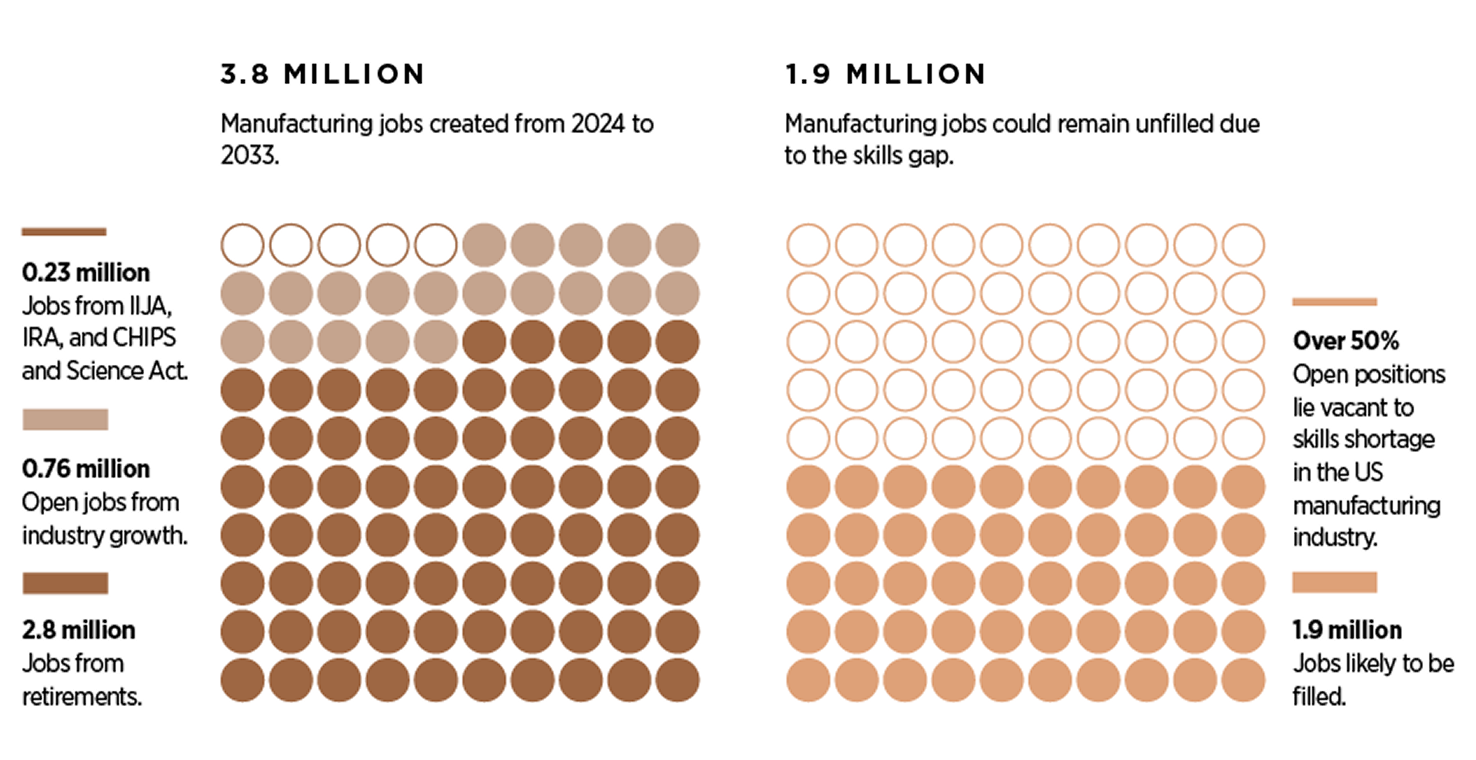
In the U.S., as in most of the world, the skilled labor needed to power this shift is rapidly aging out, casualties of ‘the Silver Tsunami’. Nearly one-third of the manufacturing workforce is over 55. The industry will need 3.8 million additional workers by 2033, on top of the more than half a million positions unfilled as of May 2025.
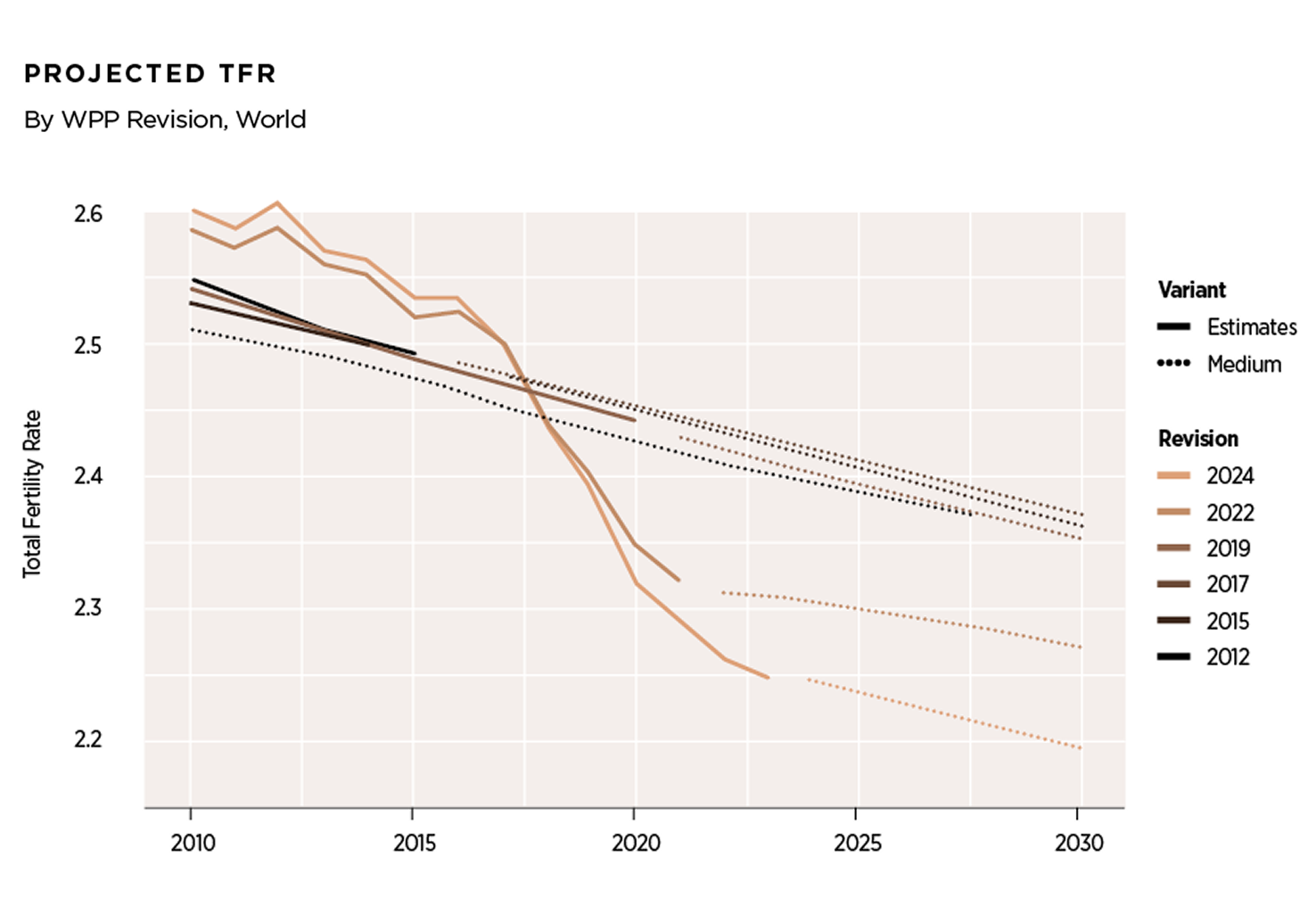
Reshoring sentiment has drastically increased given legislative and policy changes, opening a rare “greenfield” moment for those looking to adopt new technologies. The One Big Beautiful Bill Act (OBBBA) maintained key manufacturing incentives, adding sourcing constraints and making 100% bonus depreciation permanent for machinery, robotics, and automation equipment, aimed at rebuilding domestic manufacturing. At the same time, more than 300,000 immigrants were deported from the US in 2025, while humanoid robotics startups attracted several billion dollars in fresh capital in the past year, led by Figure AI’s more than $1 billion Series C round in September 2025. Declining global birth rates also reflect economic precarity in many manufacturing regions, creating a feedback loop: weaker, less stable industrial jobs depress fertility, which then tightens future labor supply and reinforces the push toward automation.
There is no clear playbook for the path ahead, which raises a fundamental question: What does this mean for the future of manufacturing?
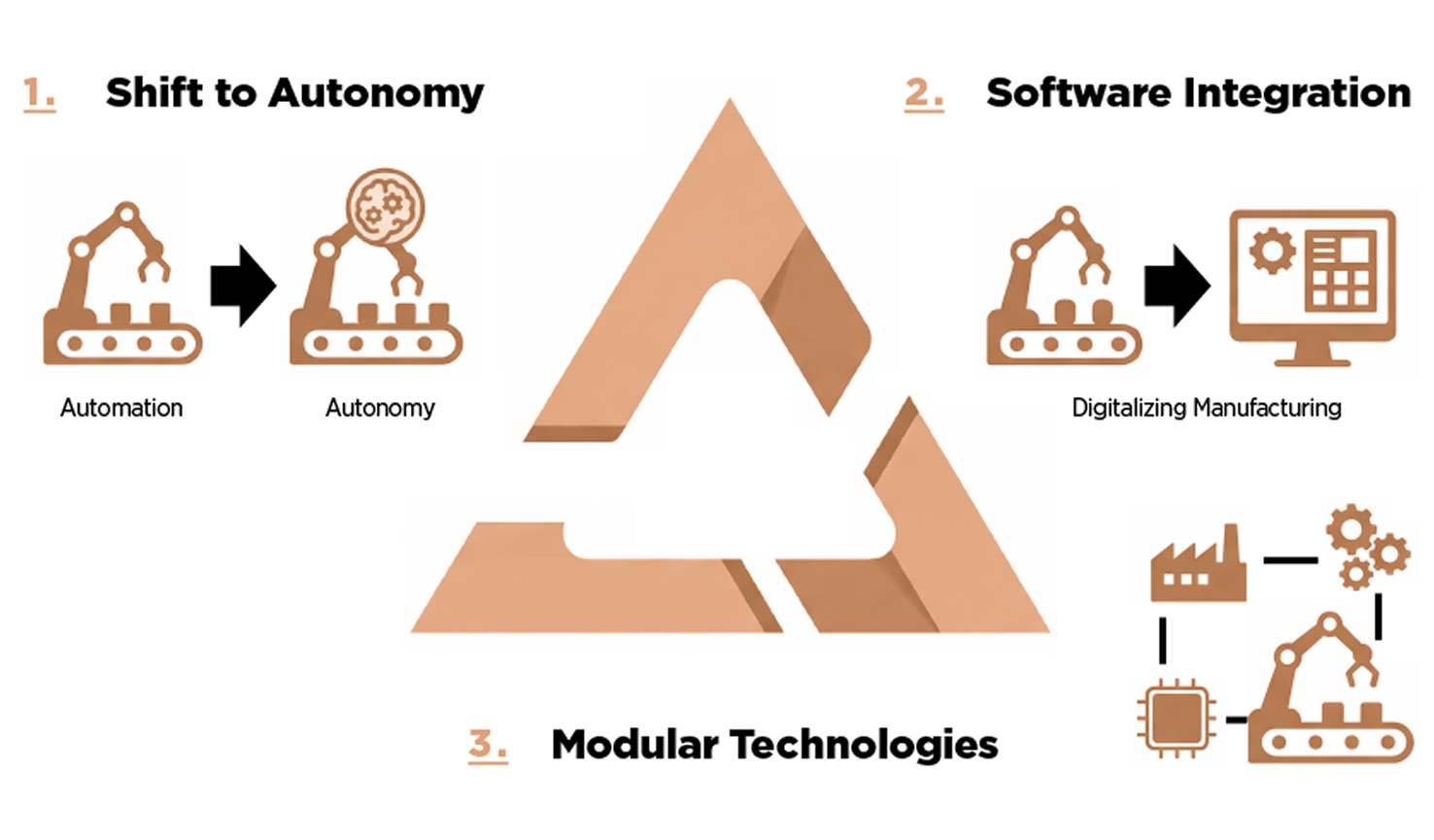
Our hypothesis is that manufacturers must completely rethink how to remain competitive in a quickly changing environment, particularly with three major paradigm shifts unfolding:
First, a shift from automation to autonomy. Whereas traditional manufacturing relied on deterministic, binary logic that performed repetitive tasks, manufacturers must embrace adaptive systems that can synthesize data across humans, machines, environments, and workflows to make real-time decisions.
Second, software must extend from the management layer down the value chain into machine-level operations. Physical systems are becoming integrated with embedded software, edge computing, and machine learning, turning manufacturing into a cyber-physical system interacting with the external environment.
Third, innovation within multi-modal systems must create modularity within platforms, making them easier to deploy even for those with legacy equipment or minimal digital infrastructure. Yet, despite the changing strategic goals, the infrastructure readiness necessary for deployment remains highly uneven.
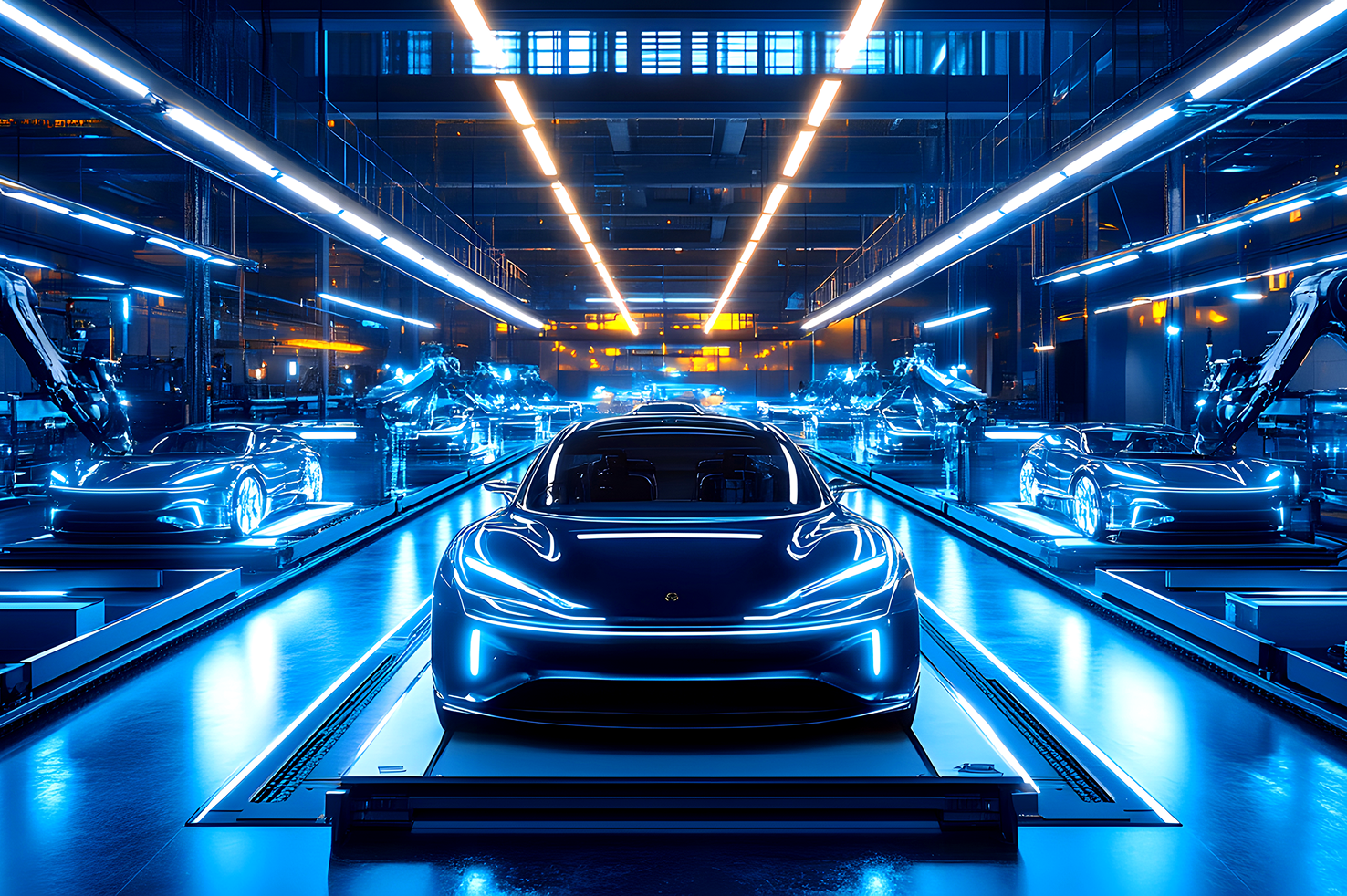
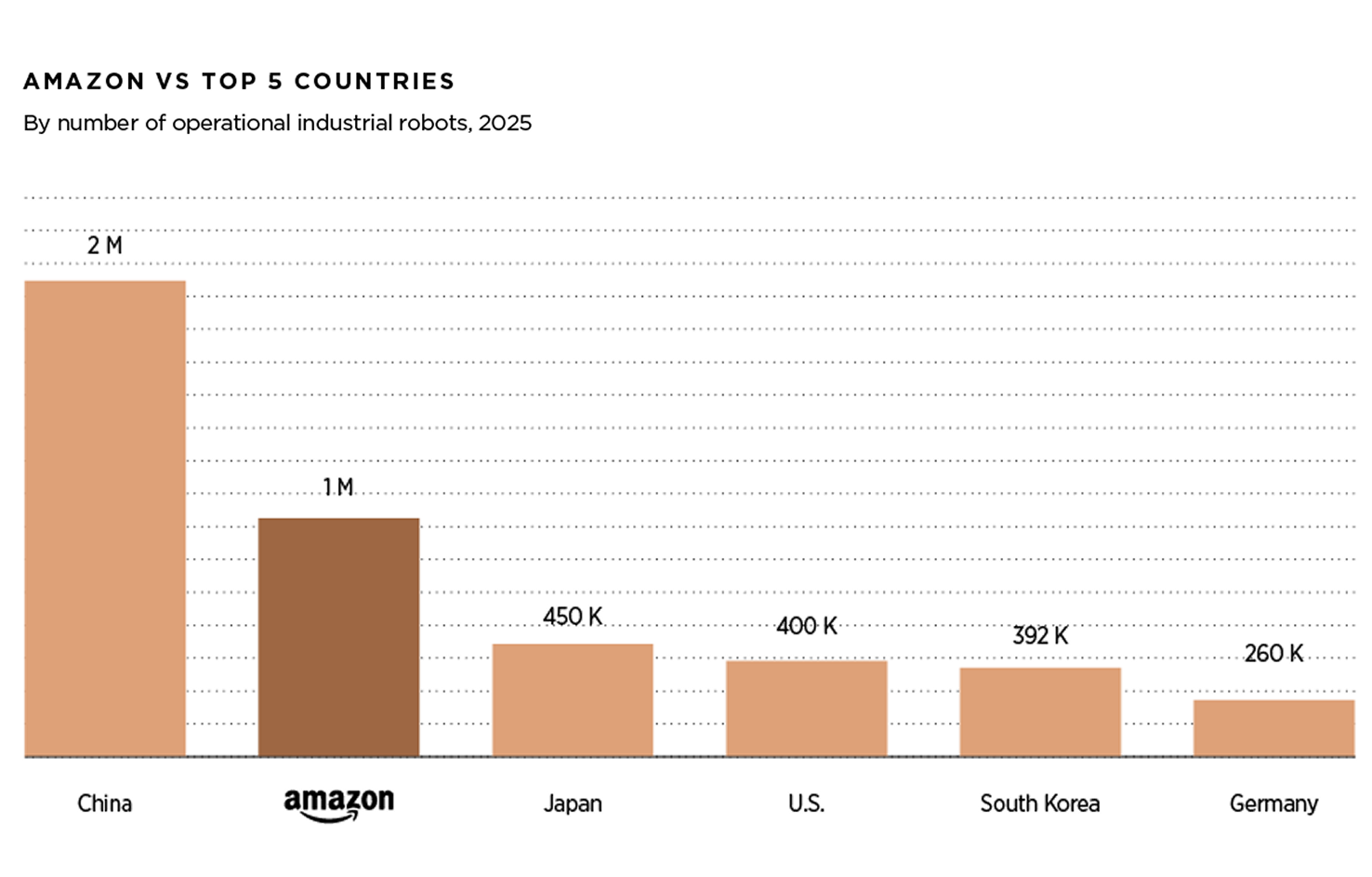
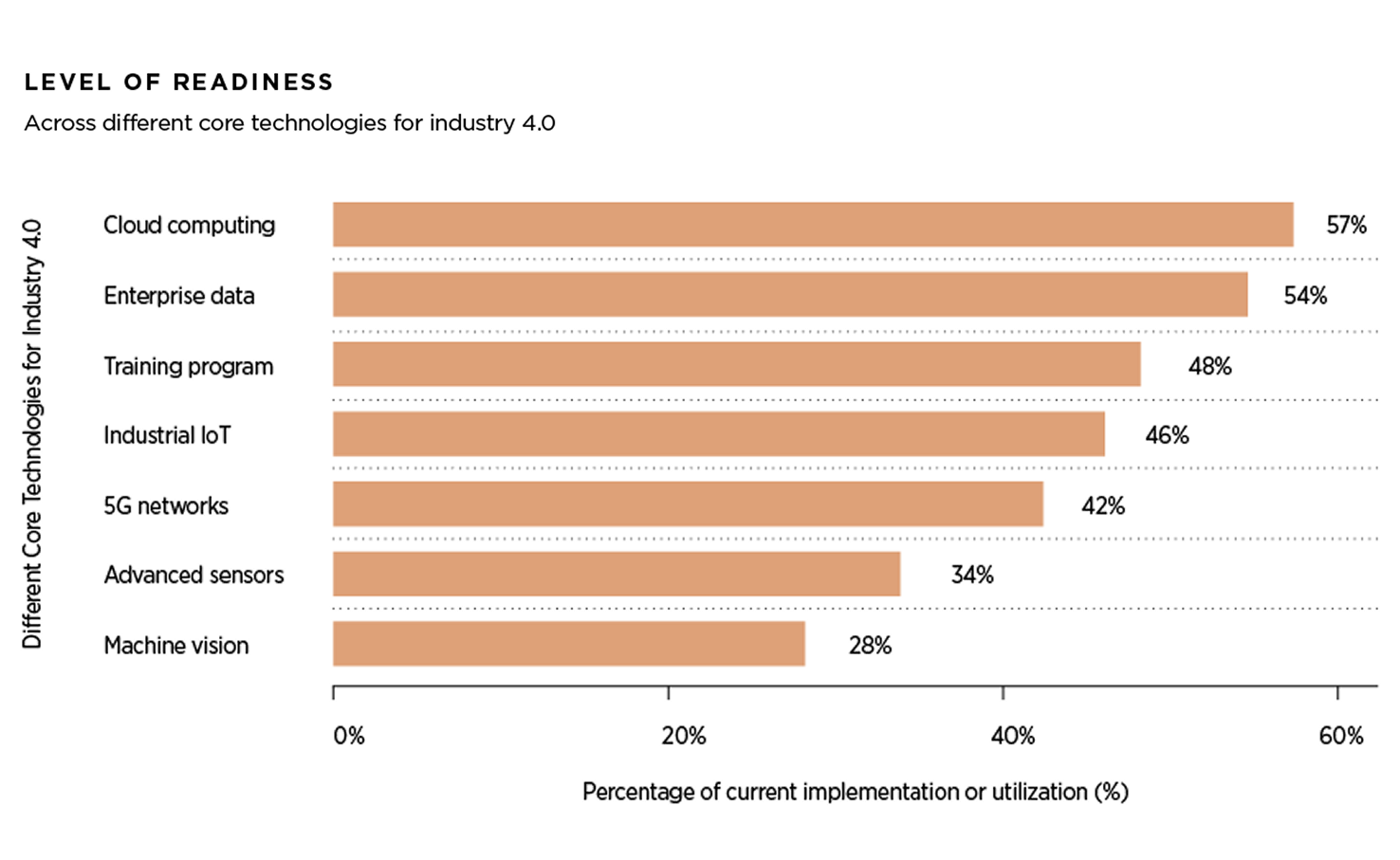
While the lion's share of North American manufacturing does not have a single robot on the factory floor, the level of technology readiness varies drastically. Leaders like Tesla’s Gigafactories or FANUC operate at 90%+ automation, with many large manufacturers like Amazon, Foxconn, and ABB following behind at 70-80%. However, the reality is that the majority of global manufacturers are small- to mid-sized manufacturers who lag on adopting core technologies: cybersecurity protocols, Industrial IoT (IIoT), edge-cloud connectivity, advanced sensor networks, data architecture, and standards.
Blackhorn portfolio companies serving manufacturing and utility customers, including Datch, ThinkLabs and TriStar, reveal two critical hurdles behind this slow adoption:
ROI-led and Build vs. Buy mentality
The manufacturing industry has not historically bought a lot of software. Driven by a strict ROI lens, many manufacturers approach adoption with a focus on clear, concrete returns. Previously, companies often defaulted to building tools in-house due to the perceived simplicity that would yield higher returns. Yet, while basic RAG pipelines can support early digitization efforts, they lack the scalability and specialized capabilities that smart factory integration needs. As limitations become more visible and costly, teams must pivot toward buying externally developed solutions that better align with their operational needs.
Trust tax
Even ROI-positive solutions must overcome safety concerns and build credibility to fit the culture where they’re deployed. Especially in legacy manufacturing environments, where skepticism of model hallucination remains paramount, tools must navigate positioning to better reinforce human expertise, not sidelining it.
Startups building in this space must understand that the manufacturing shift is not just about better tooling; it’s also about aligning deeply with operational realities, budget constraints, and adoption habits.
Once manufacturers overcome the hurdles of adopting foundational technologies, the next challenge is making new and legacy systems work in unison. This requires more than just connecting nodes; they need a secure software control layer that understands ingested data in context and can act on it with precision and intent.
This vision is materializing in different implementations. Today, use cases are emerging around digital twins for design validation and process simulation, machine vision with machine learning deployed for quality control, and predictive analytics being the fastest-growing application to better track tool wear. Technology adoption is motivated by critical needs for real-time and adaptive control over equipment and production. Building on top of current implementations, manufacturers want more agentic, context-aware systems that will supercharge top lines and efficiency.
"Leaders like Tesla’s Gigafactories or FANUC operate at 90%+ automation, with many large manufacturers like Amazon, Foxconn, and ABB following behind at 70-80%. However, the reality is that the majority of global manufacturers are small- to mid-sized manufacturers who lag on adopting core technologies"
This is where Physical AI comes in:
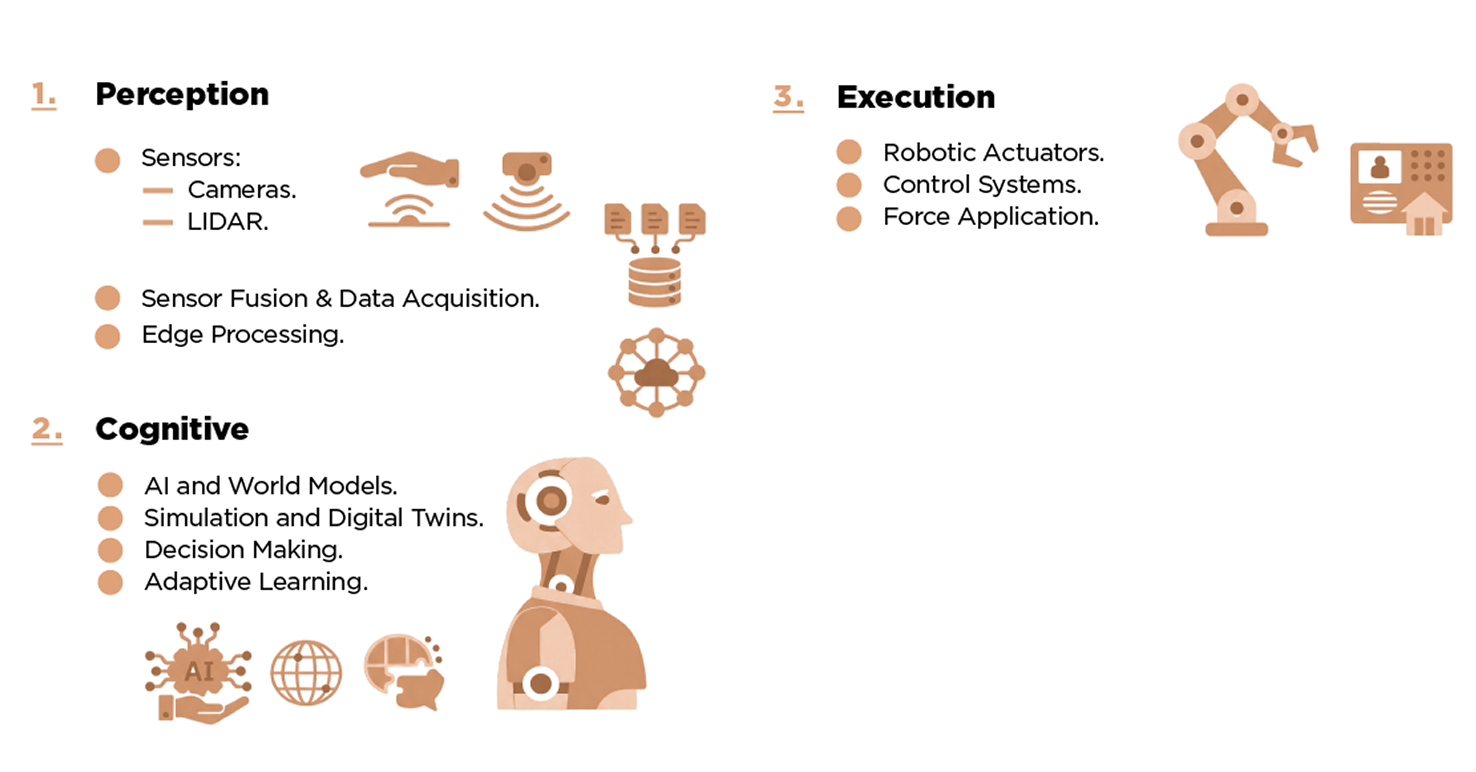
Physical AI combines sensors, intelligent models, and actuators into a closed-loop system that can perceive, reason, and act in real-world environments. If traditional AI is like a brilliant advisor who’s never touched a tool, Physical AI is like a master craftsman who can see, understand, and adapt in real time. What differentiates this from traditional LLMs or AI capabilities is the foundation of its intelligence. Physical AI is grounded and trained in real-world physics, spatial reasoning, and probabilistic logic, rather than linguistic or abstract reasoning. The algorithms understand real phenomena and, therefore, are able to unlock a new level of autonomy. Physical AI connects raw sensor data, codebase, orchestration layer, and robotic hardware to build out the automation value chain below. As a Citigroup report put it, “AI is a huge upgrade to robotics,” allowing robots to see, move, talk, learn, and act.
Instead of relying on hardcoded processes, Physical AI systems adapt continuously. If lighting changes, the vision system adjusts. If a part is misaligned, the robot recalculates its path. Systems handle tasks self-sufficiently and do so with a reason behind their recommendations.
Physical AI is increasingly filling critical gaps across the value chain, addressing the immediate challenge of labor shortages. To fill the gaps for technicians and mechanics, many manufacturers are adopting Physical AI-enabled machine control systems that utilize sensor data to detect maintenance needs and predict failures before they happen. On the assembly line, engineers are leveraging AI to augment or automate PLC code generation in order to accelerate deployment. At the systems level, AI-powered MES platforms are optimizing schedules, quality control, and resource allocation in real time. With an informed understanding of industry-specific systems, processes, and constraints, Physical AI is capable of augmenting the currently strained workflows and relieving the labor constraints currently seen.
| ADJACENT INDUSTRIES
Physical AI is expanding beyond factories. In data centers, it’s optimizing cooling and computing capacity as hyperscalers hit energy limits. Further up the value chain, utilities and grid operators are turning to real-time Physical AI to stabilize an increasingly strained grid. In construction, contractors are deploying autonomous equipment and tools to execute both onsite and back-office workflows.
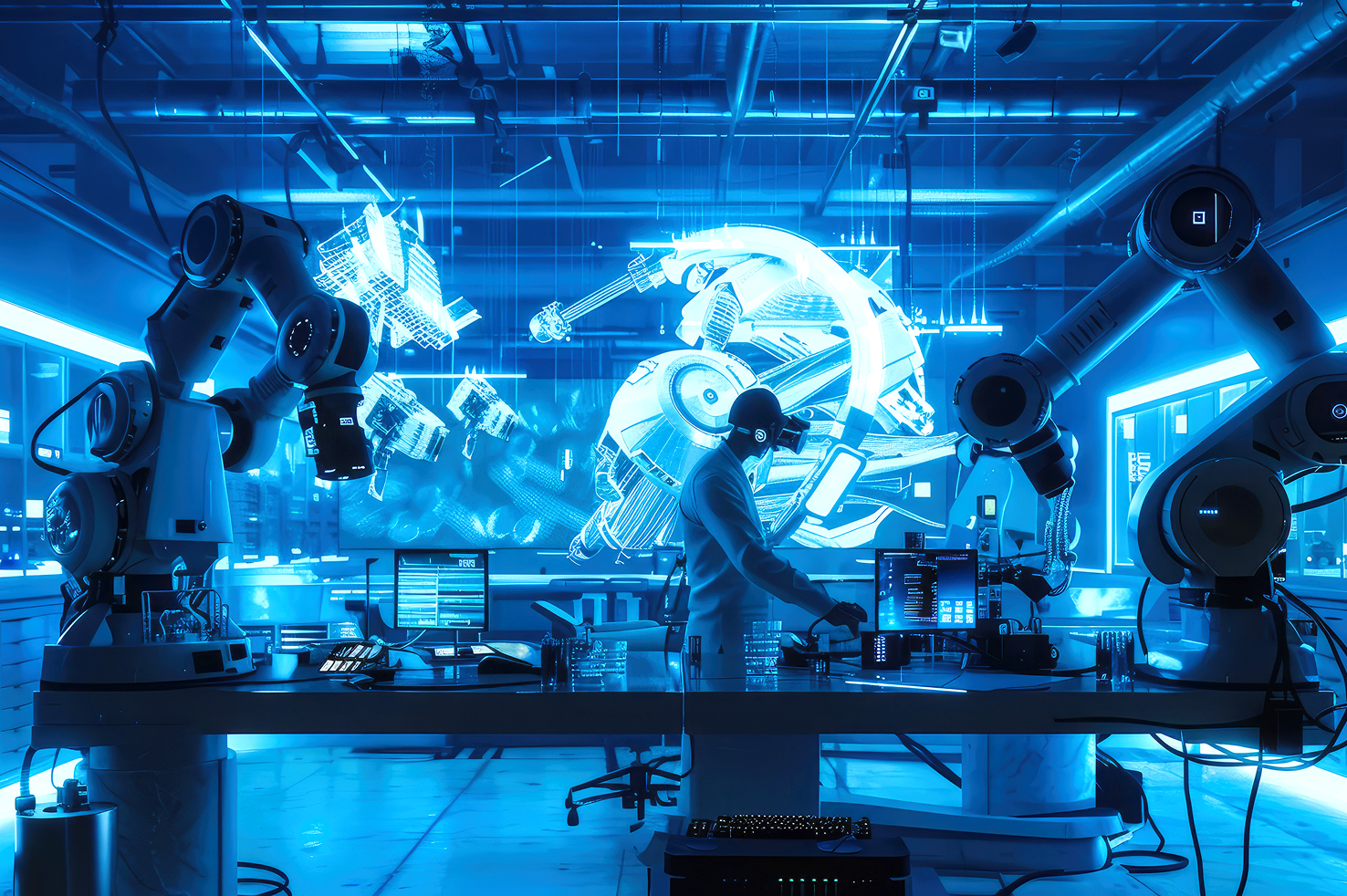
The demand to integrate physical systems with directive software and external environments is rising across sectors, and Physical AI can provide a scalable solution to solving problems that demand responsive and adaptive operational control. The tide is rising everywhere.
| BLACKHORN’S POSITIONING
As early-stage investors in Physical AI, we believe a shifting industrial landscape requires an evolving evaluation framework. Our thesis remains that the current wave of digitization in manufacturing isn’t driven by experimentation or trend followers but rather a matter of survival and long-term competitiveness. While manufacturers tend to favor “fast follower” strategies over early-risk adoption, the ROI case for Physical AI is increasingly hard to ignore. From robust quality control that assures equipment uptime to agentic solutions that preserve generations of engineers’ knowledge, this creates a massive opportunity for startup solutions that can move more nimbly than incumbents, and, by extension, for the capital backing them.
What defines a winning company in this space isn’t how sophisticated a model is or how powerful the AI-powered algorithms are. It is a deep domain understanding, operator empathy, and the ability to execute with speed and efficiency. Manufacturers are looking for solutions that integrate seamlessly with legacy environments, that earn trust with frontline operators, and that deliver tangible ROI-driven improvements.
For investors, this means understanding and underwriting deployment readiness: How fast can the product show value? Can it work across fragmented systems? Is the team deeply embedded in the workflows they aim to improve? Is the solution ‘durable’ because it owns a control point around money or data, is connected to hardware that is hard to replace, is part of an essential workflow, leverages network effects, or has an ambition to replace the entire system of record?
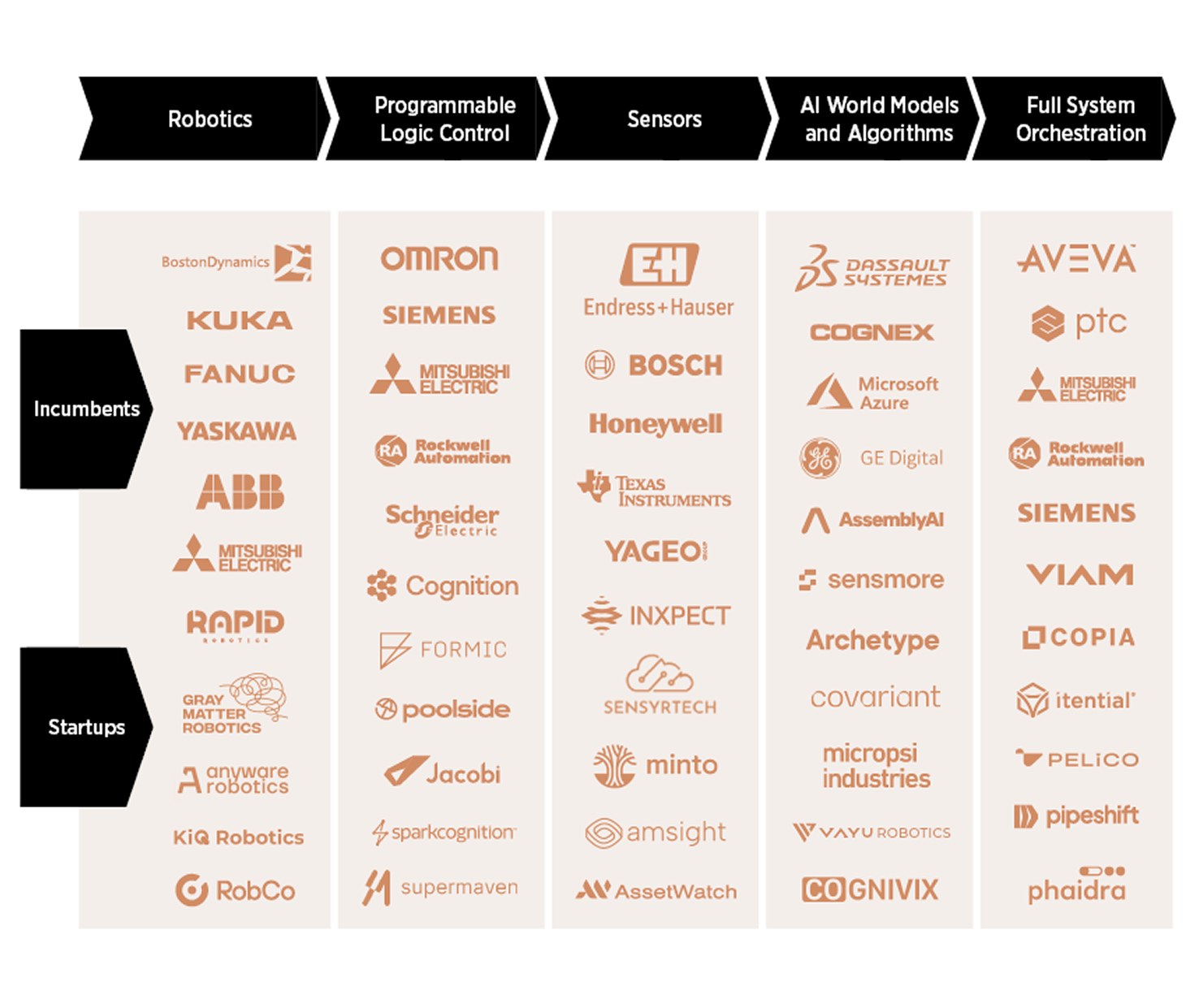
Blackhorn is launching a new research initiative to precisely map the physical AI adoption journey. Partnering with experienced builders, strategics, and investors, we will explore the critical factors driving successful deployments—from ROI and investment drivers to operational realities. In the year ahead, we will publish a four-part series diving deep into the physical AI revolution reshaping manufacturing and industrial operations. This series will draw on insights from founders, operators, and investors in our network to explore the technical breakthroughs, economic fundamentals, operational playbooks, and company-building strategies in this space. As AI moves from pixels to the physical world, we are bringing the perspective of those in the trenches to separate hype from genuine value creation.

We go into this work with eyes wide open, knowing that this is a fraught journey. A 2019 Oxford Economics report predicted automation could displace 8.5% of the global manufacturing workforce by 2030. As with AI, robotics may increase GDP while reducing employment. We believe that human–robot collaboration changes the nature of human capital. For decades, robotics strategy has been framed as a question of efficiency: Which processes should we automate? Where can machines reduce cost, increase throughput, or improve quality? That framing is now dangerously incomplete. Companies that understand robots as instruments of organizational transformation will build capabilities that are difficult to imitate—because their advantage lies not in machines alone, but in the unique way humans and machines are integrated.
This perfect storm of manufacturing pressures and technical breakthroughs will define the next chapter of industrial innovation. We remain committed to continuing to back the teams who are delivering outcomes that move the needle. The robotics sector raised a record $40.7B in 2025, and we’re just getting started. Join us.

Blackhorn Ventures
Is an early-stage venture capital firm that backs digital pioneers building a prosperous and abundant future.
blackhornvc.com