

Our paper offers a comprehensive academic and practical method for quantifying tail risk. Tail risk can stem from a variety of factors, such as supply chain disruptions, pandemics, financial bubbles, geopolitical tensions, and climate change. For illustration, we will specifically focus on climate-related risks.
The objective of the International Financial Reporting Standards (IFRS) S2 includes requiring an entity to disclose information about its climate-related tail risks and opportunities. This disclosure focuses on the impact that climate risk can reasonably be expected to have on tail risk entity's balance sheet, income statement, cash flows, and cost of capital. In contrast, IFRS S1 provides the general requirements for disclosing sustainability-related financial information. The core content in S1 and S2 builds on the Task Force on Climate-Related Financial Disclosures (TCFD) disclosure requirements over the short, medium, and long-term horizons.
TCFD provides information to investors about what companies are doing to mitigate the tail risk of climate change as well as being transparent about how they are governed. It was established in December 2015 by the Group of 20 (G20) and the Financial Stability Board (FSB) and is chaired by Michael Bloomberg . TCFD's focus is concentrated on disclosure in four key areas as follows:
1 Governance.
For instance, who oversees climate-related risks and opportunities, and where is that responsibility reflected?
2 Strategy.
For example, what climate-related risks and opportunities could affect your strategy?
3 Risk Management.
For instance, what risk processes has your organization used to identify, assess, and manage risks.
4 Metrics & Targets.
For example, how do you measure, manage, and monitor your climate risks and opportunities? How do you assess performance? How do you set and track targets?
Climate risks can be categorized into two main types: physical risks and transition risks. Acute physical risks stem from weather-related events such as storms and floods. In contrast, chronic physical risks arise from long-term changes in climate patterns, including shifts in temperature, which may lead to rising sea levels.

Transition risks arise from efforts to transition to a lower-carbon economy. These risks include policy, legal, technology, market, and reputational risks. Transition risks can also be subdivided into adaptation risks and mitigation risks. Adaptation risks are further subdivided into various financial risks, such as asset valuation, operational impairment, cost-of-business adjustments, regulatory change, and subsidy loss risks. Mitigation risks are further subdivided into regulatory, technology, going concern, water, and subsidy loss risk.
Our paper employs an abductive approach to identify plausible explanations for stress scenarios. Currently, no scientific theory effectively links climate change and macroeconomics. At best, we have weak econometric connections that do not provide reliable predictions.
| II. QUANTIFYING TAIL RISK
A quantitative climate tail risk approach can help drill down and understand the level of uncertainty in tail risk arising from climate risk and the relative importance of specific tail risks particular to an organization. Furthermore, a quantitative climate risk approach that integrates well with traditional risk measures can help identify risks and opportunities that are not detected by conventional risk analysis and are important to stakeholders. For example, stranded assets could result in higher financing costs.
Climate tail risk in some instances may be closely linked to uncertainty in financial risk and risk-adjusted performance. For example, a material acute climate event can dramatically increase the probability of default (PD) and the loss given default (LGD), which could negatively impact the company's credit rating and financing cost. In other words, a company hit with a significant climate event may materially impact its financial factors, affecting its credit rating.
Taxonomy of Uncertainty
Lo and Mueller in 2010 , introduced a taxonomy of uncertainty into six levels that can be summarized as follows:
● Level 1.
Complete Certainty - idealized deterministic Newtonian physics.
● Level 2.
Risk without Uncertainty - randomness governed by a known probability distribution for a completely known set of outcomes, like a hypothetical honest casino.

● Level 3.
Fully Reducible Uncertainty - unknown probabilities for a fully enumerated set of completely known outcomes; the setting for statistical inference (see section V.1).
● Level 4.
Partially Reducible Uncertainty—a limit to what we can deduce about the underlying phenomena generating the data. For example, more than one model may be generating the data.
● Level 5.
Irreducible Uncertainty - a state of ignorance that cannot be remedied by collecting more data, using more sophisticated statistical inference or more powerful computers, or thinking harder and smarter. This is the domain of philosophical inquiry about the unknown and unknowable.
Level Zen Uncertainty - attempts to understand uncertainty are mere illusions; there is only suffering.
| III. FORMS OF INFERENCE
Inference
There are three basic forms of inference: deduction, induction, and lesser-known abduction.
Deduction is going from general to specific using a rule. For example, deduction is used in Level 1.
● Rule.
All the beans from this bag are white.
● Case.
These beans are from this bag.
● Result.
These beans are white.
Induction generalizes from specific observations to a rule. For example, induction is used in Level 3.
● Case.
These beans are randomly selected from this bag.
● Result.
These beans are white.
● Rule.
All the beans from this bag are white.
Abduction is a best-guess explanation based on incomplete evidence. For example, abduction is used in Level 4.
● Rule.
All the beans from this bag are white.
● Result.
These beans are white. Therefore,
● Case.
These beans are from this bag.
Each type of inference serves a different purpose. Deduction is used for coming to a conclusion, induction is used to generalize, and abduction is more explanatory.

Using Abduction to Disclose Climate Risk and Opportunities
The problem of an entity disclosing climate risks and opportunities lies in the range of fully reducible uncertainty and partially reducible uncertainty (see Levels 3 and 4 in II). As such, we must carefully distinguish between causality and statistical dependencies like correlation and cointegration. DFA presents a parsimonious, coherent solution to understanding climate-related risks and opportunities in this context.
As indicated in III.1, abduction involves making an educated guess based on available climate risk evidence, often in situations where climate risk information is incomplete. Unlike deductive reasoning, which guarantees a true conclusion if the premises are true, or inductive reasoning, which generalizes from specific instances, abductive reasoning for climate risk aims to generate plausible hypotheses.
There are numerous practical ways to utilize abduction to identify climate-related risk scenarios. One way to produce hypothesis based on abduction is to use Large Language Models (LLM) to generate the circumstances under which those tail scenarios may occur.
Many models could be consistent with the sparse evidence available to date. We chose the most plausible explanation based on parsimony, noting that this choice may not be unique.
Abductive Reasoning Example
We conducted a path-dependent, multi-period Monte Carlo simulation (MCS) for a bicycle company to provide a clear illustrative example of abductive reasoning in a decision-making framework. The economic scenarios revealed that the company's net profit was highly sensitive to macroeconomic uncertainty over a four-year period. We introduced stochastic macroeconomic scenarios that influenced both revenues and costs. The revenue and cost values at the start of each new year were based on the ending values from the previous year.
After analyzing multiple tail paths, we examined cumulative net profit outcomes at various percentiles to assess dispersion and downside risk. For example, the macroeconomic shocks resulted in a 1st percentile cumulative net profit of $1,084,000 and a 99th percentile cumulative net profit of $1,494,000. Using abductive reasoning to examine the economic scenarios, we concluded that the impact of climate change had a negative effect on the results, particularly at the 1st percentile cumulative net profit level.
Although our MCS did not directly include climate risk, we employed abductive reasoning to examine its potential impact on tail risk, such as the 1st percentile cumulative net profit of $1,084,000. As discussed earlier, Level 4 uncertainty involves “model uncertainty”, not only in the sense that multiple models may be consistent with observation, but also in the more profound sense that more than one model may very well be generating the data. Furthermore, given that there are different econometric models attempting to connect macroeconomic variables with climate change, it is reasonable to say this is at least a Level 4 situation.
"We must carefully distinguish between causality and statistical dependencies like correlation and cointegration. DFA presents a parsimonious, coherent solution to understanding climate-related risks and opportunities in this context"

Just because one explicitly models a connection, no matter how elaborate, does not mean that it is necessarily causal or predictive. Abductive inference starts with data, often incomplete, then seeks consistent explanations. At best, one can assert that such models are consistent with the limited data and that the model uncertainty is high. In conclusion, this analysis presents a practical framework for using abductive reasoning to assess tail risk in cases where there are multiple effects, such as climate change, supply chain disruption, or geopolitics, that could explain DFA results.
| IV. DFA APPROACH
In particular, we adopt a Dynamic Financial Analysis (DFA) approach that holistically looks at an enterprise's risks. In addition to projecting stochastic future economic risk scenarios through scenario generator models, DFA links the scenarios with the financial models of the entity being analyzed. In particular, our approach consists of the following components.
➊ Stochastically simulate many diverse economic scenarios, including some beyond the historical record.
➋ Decide on myopic mitigation business strategies to respond to contingencies (see VII).
➌ Generate cash flows under uncertainty and use them to calculate the firm’s economic value along each economic scenario path (see VIII).
➍ Examine the distribution of firm value at different time horizons, such as the short, medium, and long-term horizons (see IX).
➎ Use abduction to attribute risk for tail scenarios. For example, possible causes include supply chain disruption, pandemics, financial bubbles, geo-political tensions, and climate change.
| V. DFA STOCHASTIC SIMULATION
DFA utilizes stochastic simulation models to offer a comprehensive view of balance sheet, income statement and cash flow risk. It can be deployed to integrate systemic risks, such as climvate Risk, with changes in economic factors, such as interest rates, economic downturns, and other material economic events.
In particular, DFA offers a comprehensive view of risk by integrating various variables and their potential interactions over time. It combines multiple aspects of a business to examine how different parts of the entity affect each other and the overall financial risk.
Stochastic simulation in the context of financial cash flow modeling is a technique that overcomes the limitations of a single deterministic scenario. It generates thousands of scenarios stochastically to help stakeholders understand the range of the likelihood and severity of future possible outcomes. For example, DFA can be used to provide a comprehensive understanding of the full probability distribution of key output variables for, say, insurance companies, such as surplus, written premiums, or loss ratios.

"DFA utilizes stochastic simulation models to offer a comprehensive view of balance sheet, income statement and cash flow risk. It can be deployed to integrate systemic risks, such as climvate Risk, with changes in economic factors, such as interest rates, economic downturns, and other material economic events"
Furthermore, organizations can utilize DFA to quantify and manage both specific and systemic risks more effectively. It allows organizations to see how risks interrelate and their potential cumulative impact on financial stability. By understanding the dynamics of risks and their possible consequences, entities can develop more effective risk management strategies.
| VI. CHALLENGES IN CONSTRUCTING SCENARIOS
Scenario climate risk analyses are valid only for a specific scenario. For example, standard climate risk scenario approaches, such as the Network of Central Banks and Supervisors for Greening the Financial System (NGFS), are useful only if the scenario is correct.
The NGFS has developed standardized climate risk scenarios to assist institutions in gauging vulnerabilities. Key elements of the NGFS approach include an orderly transition scenario aligned with Paris Agreement goals and disorderly transition scenarios.
At the heart of all AI algorithms are the neural networks that do the computations. Machine learning involves three key considerations - approximation, optimization, and generalization; neural network architecture critically depends on these criteria.
Inspired by the Kolmogorov-Arnold representation theorem, Liu et al in June, 2024 proposed Kolmogorov-Arnold Networks (KANs) as promising alternatives to black box Multi-Layer Perceptrons (MLPs). While MLPs have fixed activation functions on nodes (“neurons”), KANs have learnable activation functions on edges (“weights”). KANs have no linear weights at all - every weight parameter is replaced by a univariate function parametrized as a spline. They show that this seemingly simple change makes KANs more interpretable than MLPs.
Compositional sparsity, or the property that a compositional function has “few” constituent functions, each depending on only a small subset of inputs, is a key principle underlying successful learning architectures. Over time, MLP architectures have been optimized for many different applications, such as regression, classification, and time series.
KANs are concatenated layers of univariate function matrices. Unstructured, these matrices make KANs slower to train and run than traditional MLPs. Nan Tie in Aug 2024 introduced two structured DCD matrix forms to sparsify layers, thereby speeding up learning the univariate functions (e.g. B-splines or wavelets) and has sub-quadratic runtime; a neural network that by design has compositional sparsity.
The main drawback of MLPs is that while they work, they are nonetheless black boxes. In time, KANs will be tailored and optimized to applications just as MLPs were. It is difficult to have confidence in results if we don’t understand how they were arrived at. Sparse Kolmogorov-Arnold networks on the other hand, are efficient, accurate and most importantly, interpretable. As such, they hold potential for explainable AI. Moreover, they also enable discovery of new patterns in data, aiding scientific research.
The key is to let the data speak for itself. For example, the goal is to connect macroeconomic data such as GDP-related data with climate data. KANs connect the dots of the network's output fundamentally differently than MLPs. Instead of relying on edges with numerical weights, KANs use functions. These edge functions are nonlinear, meaning they can represent more complicated curves. They're also learnable so that they can be tweaked with far greater sensitivity than the simple numerical weights of ML. The most significant advantage that KANs hold over other forms of neural networks and the principal motivation behind their development is their interpretability.
The approach calls for using KANs to connect climate to macro data as well as to connect macro to climate data and let the data speak for itself.
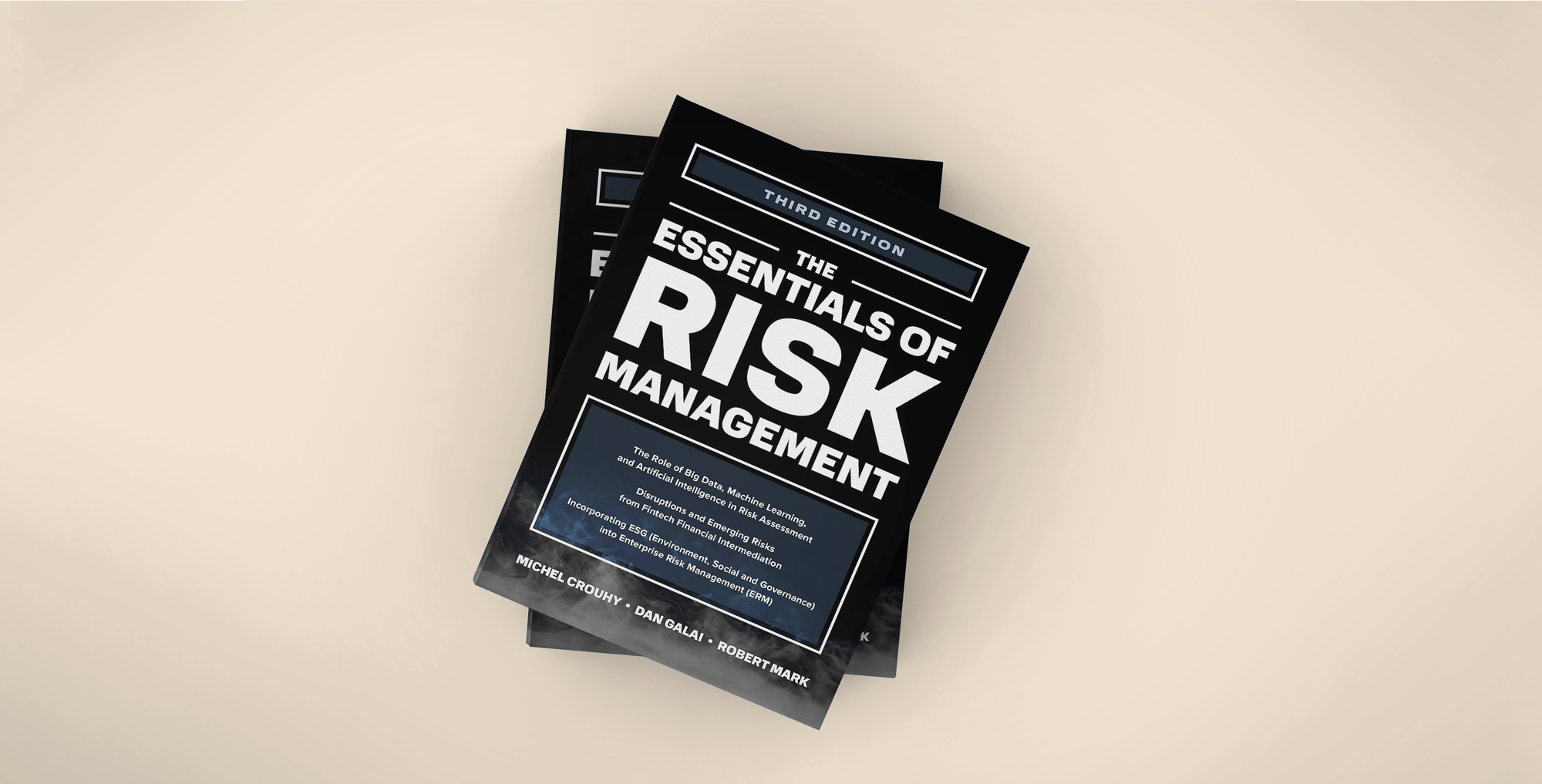
The Essentials of Risk Management
The “bible” of risk management―fully updated for an investing landscape dramatically altered by social and technological upheavals.
Applying stochastic simulation scenarios allows nuanced, forward-looking assessment of climate vulnerabilities beyond what historical data offers alone. As climate risk management matures, adopting standardized scenarios facilitates adequate supervision and comparison across institutions, supporting orderly transitions to sustainable, net zero emissions economies. Nevertheless, several challenges ar associated with using standardized scenarios. These include:
➊ Identifying relevant stress scenarios for physical and transition risks requires the collaboration of experts such as risk managers, economists, business managers, climate risk, and supply chain experts.
➋ Constructing event-specific tail risk scenarios and an integrated view of climate risk that stresses components individually and on an aggregate basis while modeling extreme climate risk events in significant detail.
➌ Addressing correlations between risk factors and distinguishing between static and dynamic scenarios.
➍ Constructing climate risk stress scenarios that are severe but plausible. and measuring knock-on risks.
➎ Integrating climate stress tests with traditional stress tests, such as aligning them with the scenarios used in traditional stress tests to ensure consistency.
| VII. MYOPIC ADAPTIVE BUSINESS STRATEGIES
Yogi Berra said “It's tough to make predictions, especially about the future.”
Why adaptive myopic contingencies
The “cone of uncertainty,” used by many weather services in the US to show the predicted aths of hurricanes on maps, represents the 66% confidence interval across thousands of simulations of the future paths of a hurricane. Intuitively, the further out in time a prediction, the more uncertain we are about the prediction. Over time, as new information is revealed, we can, however, course correct to dynamically update our forecasts.
A fundamental concept in statistical decision-making is the explore-exploit tradeoff. Exploitation involves choosing the best option based on current knowledge of the system (which may be incomplete or misleading). In contrast, exploration involves trying out new options that may lead to better outcomes in the future at the expense of an exploitation opportunity.
In some statistical decision problems, myopic strategies are optimal. Simply put, it states that if the only possible transitions from an unfavorable state are to other unfavorable states, then it is best to conform to a myopic rule that specifies that the process should be continued only when the decision maker will realize an immediate gain by continuing it. We are more confident forecasting tomorrow’s weather than a fortnight out!
Having myopic contingencies for adverse events allows business decision-makers under uncertainty to adaptively course correct based on the best available information. This minimizes the risk of overcommitting resources to circumstances that may not eventuate.
The scientific method begins with observation and questions to formulate hypotheses about how and why phenomena occur. For example, through experiments and data collection, we can refine our hypotheses to construct myopic adaptive business strategies (MABS) to adjust for changes in climate risk.
MABS refers to a decision-making approach that an organization can use to make adaptive short-term business adjustments based on business criteria, such as risk-adjusted return considerations in the near term. MABS benefits from adaptability through continuous feedback.
Organizations that deploy MABS must be confident in their short-term risk measures while acknowledging long-term consequences.
A MABS risk-based strategy is not just about adaptability but also about relevance. For example, like servo mechanisms, MABS focuses on optimizing decision-making under uncertain, risky outcomes by relying primarily on recent outcomes while considering long-term dependencies observed over time. This emphasis on dynamic course correction ensures the strategy is always up-to-date and relevant, even in dynamic or uncertain environments.
| VIII. MANAGING CASH FLOW UNCERTAINTY
Uncertainty quantification, which quantitatively characterizes and estimates uncertainties, is essential to identify model usefulness. Uncertainty quantification includes defining the range of possible outcomes when certain aspects are not precisely known. Also, discounting cash flows (DCF) under simulated scenarios help investors, companies, and analysts assess the values of investments, projects, and financial instruments. Several analytical techniques are useful for DCF under uncertainty, each with its own applications and challenges.
An interest rate generator
A key module of a DFA model is an interest rate generator. Many empirical-based assumptions need to be made, such as the degree to which interest rates strongly correlate with inflation. Further, valuing stochastic cash flows requires incorporating stochastic distributions, discounting techniques, and risk adjustments. This provides a realistic and comprehensive view of future cash flows, aiding in better financial decision-making and risk management.
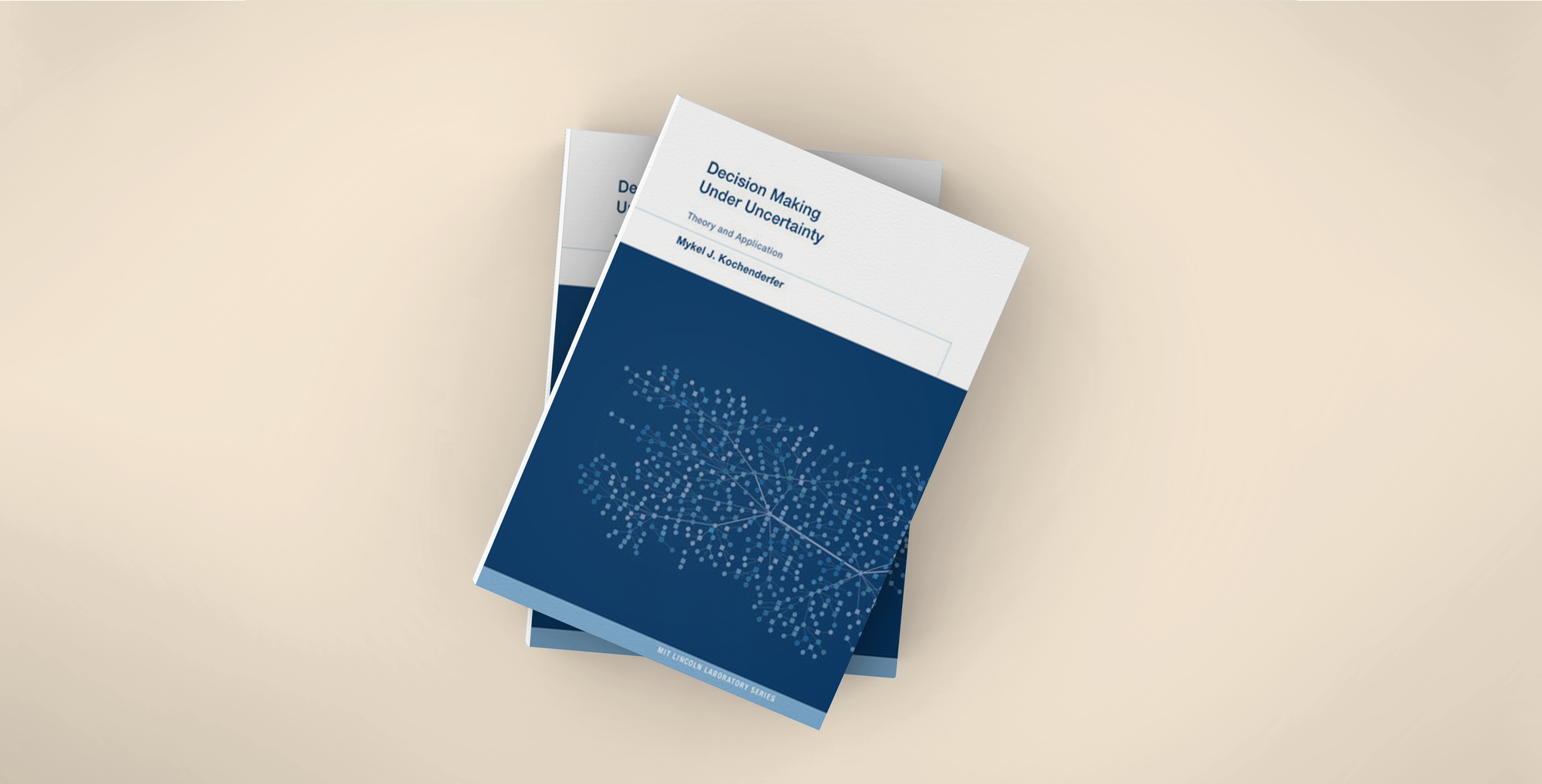
Decision Making Under Uncertainty
An introduction to decision making under uncertainty from a computational perspective, covering both theory and applications...
A primary stochastic interest rate driver needs to be selected, such as the instantaneous short-term interest rate model, which contains plausible features of interest rate movements, such as specifying volatility of yields at different maturities, specifying that rates are mean-reverting, etc. Further, the interest model should be well-specified in that required inputs can be observed or estimated.
Model Selection
Model Uncertainty. Climate models are founded on scientific principles informed by physics. However, simulating the partial differential equations (PDEs) that describe these physical laws can be computationally demanding and costly. To address this, climate models utilize various applied mathematics tools to approximate the behavior of real-world phenomena. To mitigate model risk, obtaining robust parameterization is crucial to designing an effective climate model.
"MABS refers to a decision-making approach that an organization can use to make adaptive short-term business adjustments based on business criteria, such as risk-adjusted return considerations in the near term. MABS benefits from adaptability through continuous feedback"

Forecasts from climate models often fail due to various microeffects, such as the behavior of clouds, which can trap heat or reflect sunlight. Further, since clouds are much smaller than the units of distance typically used in climate models, these models cannot capture individual clouds. Nevertheless, the collective impact of clouds significantly influences the Earth's temperature.
Climate models have proven effective in predicting Global Mean Surface Temperature (GMST) changes. Most of the reviewed climate models indicate warming trends that align with observational data, particularly when accounting for discrepancies between the model projections and actual observations. While climate models should be assessed based on the accuracy of their underlying physics, they are not designed to predict future emissions or changes in external factors that depend on human behavior, technological advancements, and economic and population growth.
It is important to note that a higher level of uncertainty increases the potential for model risk. However, we should consider parsimony when selecting suitable climate models. As discussed, Lo and Mueller's continuum of uncertainty (see II) is not definitive but serves as a valuable guide in this context.
Neural networks can help identify patterns within large, complex datasets. However, once a pattern is discovered, understanding its nature is crucial. The pattern could be causal or spurious, and its predictability may differ. In conjunction with a climate model, a Koopman operator can learn the dynamics of any missing physics and account for microeffects. A Hybrid AI Koopman-Climate Model (HKCM) augments the ability of current climate models to more accurately model real-world measurements by training a Koopman operator model to learn the dynamics of the difference between the predictions from physics-based current climate models and the actual measured records at each time step. A data-driven reproducing kernel Hilbert space approach can jointly learn the Koopman operator and the Koopman embedding, enabling coherent state recovery for non-linear dynamical systems prediction.
Reliable, data-driven methods exist for modeling climate physics and utilizing AI to predict climate change trajectories. We advocate for increased scientific research and the development of climate models to assist governments in mitigating transition risks.

● Climate Risk Modeling
Climate risk models combine outputs from climate models with an AI layer with macroeconomic models to evaluate the potential impacts of climate change on an institution's balance sheet, income statements, and cash flows.
In the finance sector, macroeconomic model risk arises from differing financial models that interpret latent risk factors in various ways. Economic models are often criticized for lacking causality and demonstrating poor predictive capabilities. Banks and insurance companies need reliable projections to.
When choosing a climate model, it’s crucial to start by asking, "What problem am I trying to solve?" Clearly defining the problem helps determine the level of uncertainty involved. Understanding this uncertainty is vital, as it directs us to the appropriate types of climate models and the inferences we should draw. Furthermore, it clarifies which risk measures are relevant and identifies the potential risks associated with the model.
DFA Climate Risk Model
When selecting a DFA climate risk model, it is also crucial to start by clearly defining the question you want to answer. This foundational step helps you identify what would be considered an acceptable response. Engaging stakeholders is essential for gaining their support, as their backing can significantly impact the direction of your work.
Once you have the support of stakeholders, assign clear responsibilities for developing and vetting the mathematical components necessary for implementing the DFA climate risk model. Developing a strong intuition about the key relationships in the DFA climate risk model is vital, as this understanding can effectively guide your analysis.
When evaluating the fit of the DFA climate risk model, it is important to ensure that the underlying assumptions align with the available data. Simple data checks and summaries can enhance your understanding of the model's performance. While conducting your DFA climate risk analysis, consider whether your conclusions are actionable, whether you understand the problem's context, and whether you have relevant prior knowledge. It is also crucial to assess the level of uncertainty involved and determine the appropriate type of inference.
Four Core DFA Components
To begin, deploy DFA’s economic scenario generator to produce multiple future time periods of economic paths. At each future time horizon DFA provides a distribution of economic patterns, balance sheets, income statements, and cash flows, across multiple paths.
Next, you focus on adverse tail event outcomes and examine potential causes. For example, you might observe that adverse cash flow patterns occur in a significant number of paths when there is a significant increase in inflation, a substantial drop in the stock market, and declining credit quality.
Third, use abduction to formulate an explanation for the adverse cash flow patterns. Abduction plays a vital role in the DFA process when incorporating climate risk into the analysis of adverse outcomes. The initial step involves recognizing that adverse cash flows can be explained by many different causes. Next, using abductive reasoning, formulate an explanation. For instance, an explanation is like a hypothesis that needs to be revised based on new information. For instance, an explanation might correlate the increased frequency and intensity of storms with rising regional temperatures that in turn is disrupting supply chains as a plausible climate risk hypothesis.
Lastly, decide on what actions you want to take to make informed decisions to mitigate climate change risk. For instance, the company may decide to invest in storm-resistant infrastructure, renewable energy solutions, and alternative supply chains to mitigate identified risks and protect profitability.
Companies should consider conducting "what if" stress scenarios to gain deeper insights into climate risks. It is important to avoid choosing extreme black swan scenarios and instead focus on those that have varying degrees of plausibility. This approach will enable risk managers to effectively evaluate these "what if" stress tests.

Be mindful of potential endogenous feedback loops that may introduce systemic risk. Additionally, remember that assessing the fit of the DFA climate risk model often requires subjective judgment.
Ultimately, it is crucial to maintain accuracy for analytic convenience. Identifying the conditions under which a model may fail is a key aspect of evaluation; stress testing under extreme and rare scenarios can provide valuable insights. Each of the four models in bold type needs to be parsimonious as well as integrated and harmonized with one another in the simulation scenarios described above. Additionally, examine whether the DFA climate risk model results are robust against plausible perturbations, as this will help you distinguish between DFA climate risk model validation and robustness.
To summarize, first deploy the DFA's economic scenario generator to produce multiple future economic paths over various time periods. Next, concentrate on adverse tail event outcomes and investigate their potential causes. Third, utilize abduction to develop an explanation for the negative cash flow patterns. Finally, determine the actions you can take to make informed decisions aimed at mitigating the risk.
| IX. SHORT-TERM, MEDIUM-TERM, AND LONG-TERM
TCFD calls for making climate risk trade-offs in the short, medium, and long-term. Organizations must strategically navigate tradeoffs between actions with different implications over short, medium, and long-term periods.
Short-term tradeoffs, spanning 1 to 3 years, often involve deciding between making capital investments or prioritizing immediate profitability. For example, a company might need to invest in energy-efficient technology or climate-resilient infrastructure, which could reduce short-term profitability due to initial costs. However, these investments can help mitigate long-term climate risks and operational expenses, such as lower energy bills and reduced carbon taxes.
Medium-term tradeoffs, spanning 3-10 years, involve proactively managing investor expectations vs. long-term climate goals. By taking proactive steps to align climate risk strategies with investor expectations, companies can demonstrate their commitment to long-term sustainability and resilience.
Long-term tradeoffs, extending beyond ten years, include considering stranded asset risk management vs. innovation. Companies holding long-term assets in high-carbon sectors, such as coal plants, risk becoming stranded assets as the world shifts to low-carbon energy. A critical long-term tradeoff is deciding whether to decommission these assets and absorb immediate financial losses prematurely or risk keeping them active, hoping for a slower transition or new technologies to innovate and mitigate their impact.
These tradeoffs illustrate the complexities of integrating climate risk management into business strategy, where short-term sacrifices might be made to secure long-term sustainability and resilience. As pointed out, the TCFD framework encourages companies to disclose these tradeoffs to ensure transparency in managing climate risks across different time horizons.

| X. MODEL RISK
Organizations need to establish if a proposed DFA model will meet their needs. In particular, assess whether the model uncertainty is acceptable. Experience, knowledge, and intuition of actuarial, economic, and management users play a dominant role in evaluating a DFA model. A danger in this respect might be that non-intuitive results could be blamed on a flawed model instead of wrong assumptions.
A further possibility for evaluating a model is to test the DFA model's results against empirical results. This would only be feasible in very few restricted cases because it would require tracking data for several years. However, model validation should deserve more attention.
Even if a DFA model is correct and used to tackle an appropriate problem, the danger remains that it will be incorrectly implemented. For example, with complicated DFA models that require extensive programming, there is always a chance that a programming “bug” may affect the model’s output. Many programs that seem error-free have been tested only under normal conditions and may be error-prone in extreme cases and conditions.
In DFA models that require a Monte Carlo simulation, large inaccuracies can creep in if not enough simulation runs or time steps are implemented. In this case, the DFA model might be suitable, and the data might be accurate, but the results might still be wrong if the computation process is not given the time it needs.
| XI. CONCLUSION
To implement DFA, an organization needs to sort out the issues related to the complexity of DFA, such as the resources necessary for DFA, as well as the potential for model risk arising from integrating climate risk into existing risk measures.
DFA is a valuable tool that provides a comprehensive approach to integrating climate risk management with existing risk management and strategic planning methods. Its capability to incorporate various climate risk scenarios alongside existing risk management situations, as well as to evaluate the interaction between climate risk and different financial variables, makes it an effective method for enhancing decision-making and improving economic performance.

Gary Nan Tie
Mu Risk LLC, cross-disciplinary mathematical research, model risk management, and advanced artificial intelligence.

Robert Mark
Managing Partner at Black Diamond Risk Enterprises.
blackdiamondrisk.com