

For more than two centuries, United States strategy in the Western Hemisphere has been shaped by a single enduring concept: the belief that the Americas constitute a strategic sphere whose stability directly affects U.S. national security. That concept originated in the James Monroe Doctrine, announced in 1823, and has evolved through successive reinterpretations reflecting shifts in global power structures, ideological confrontation, and emerging security threats.
What began as a warning against European colonial restoration gradually transformed into a broader framework of hemispheric management. Across the nineteenth and twentieth centuries—and into the emerging strategic landscape of the twenty-first—the doctrine has adapted to new geopolitical realities. Today, analysts increasingly describe a contemporary reinterpretation emerging during the second administration of Donald Trump, informally labeled the “Donroe Doctrine.”
The evolution from Monroe to “Donroe” reflects not merely a change in presidential rhetoric but a structural transformation in how Washington defines sovereignty, influence, and intervention in an era shaped by great-power competition, transnational criminal networks, and technological rivalry.
| EVOLUTION ACROSS U.S. FOREIGN POLICY
The Original Doctrine: Hemispheric Exclusion (1823).
The James Monroe Doctrine, articulated in the president’s annual message to Congress on December 2, 1823, declared the Western Hemisphere closed to further European colonization and warned European monarchies against intervention in the newly independent republics of Latin America. In exchange, the United States pledged non-interference in European conflicts and internal affairs.
At the time, the United States lacked the military capacity to enforce the doctrine. Its credibility depended largely on British naval power, which also opposed renewed Iberian colonial expansion. Nonetheless, the declaration established a conceptual boundary: the Americas would evolve as a distinct geopolitical system separate from European imperial politics.
Although framed as defensive, the doctrine implicitly defined the Western Hemisphere as a U.S. sphere of influence, laying the intellectual foundation for future strategic policy.

| US EXPANSIONIST POLICY – THE MANIFEST DESTINY
In 1845 journalist John O’Sullivan argued the nation’s “Manifest Destiny” – meaning an obvious and inevitable fate ordained by Providence (God) for the United States to expand liberty and democracy across the continent. The doctrine therefore blended three ideas:
➊ Providential mission: expansion believed to be guided by God.
➋ American exceptionalism: belief that the U.S. political system was uniquely virtuous.
➌ Territorial expansion: justification for acquiring lands westward.
The religious and ideological narrative around Manifest Destiny helped legitimize several major territorial expansions: events reinforced hemispheric dominance:
● Mexican–American War (1846–1848) – U.S. territorial expansion into California and the Southwest (Texas Annexation).
● Spanish–American War (1898) – U.S. intervention in Cuba and acquisition of Puerto Rico, Guam, and the Philippines.
● Construction of the Panama Canal (1904–1914), cementing American maritime and commercial influence in the hemisphere.
Manifest Destiny was not an official doctrine like the Monroe Doctrine, but it strongly shaped the mindset behind American territorial expansion and hemispheric primacy.
| THE ROOSEVELT COROLLARY AND EARLY INTERVENTIONISM
At the beginning of the twentieth century, President Theodore Roosevelt expanded the doctrine through the 1904 Roosevelt Corollary. The corollary asserted a unilateral U.S. right to intervene in Latin American states to preclude “chronic wrongdoing” or European creditor intervention. Stability, defined in Washington, became the operative standard.

The shift was structural: from passive exclusion of European powers to active hemispheric management. The corollary rationalized repeated interventions in the Caribbean Basin and Central America, embedding enforcement prerogatives into U.S. regional strategy and consolidating hemispheric asymmetry.
| THE COLD WAR: CONTAINMENT IN THE HEMISPHERE
Following the Second World War, hemispheric doctrine converged with the strategic logic of global containment. In the context of systemic rivalry between the United States and the Soviet Union, anti-communism became the organizing principle of U.S. policy in the Western Hemisphere. The Cold War’s ideological bipolarity, liberal-capitalist constitutionalism versus Marxist-Leninist state socialism, was reinforced by nuclear deterrence, proxy warfare, and geopolitical competition throughout the developing world.
During the Cold War, the primary external actor was the Soviet Union, which established a geopolitical and ideological foothold across Latin America and the Middle East. In Latin America, this was catalyzed by the Cuban Revolution in 1953, after which Moscow became Havana’s principal patron, culminating in the Cuban Missile Crisis. Soviet support extended to leftist movements and governments across the region. Within the hemisphere, Washington treated alignment with Moscow not merely as ideological divergence but as an existential security threat. This securitized framework underpinned a series of interventions and covert operations intended to prevent perceived Soviet penetration. The 1954 CIA-backed coup in Guatemala, the 1965 military intervention in Dominican Republic, and U.S. involvement in the 1973 overthrow of Salvador Allende in Chile were each justified in Washington as preemptive measures within the broader doctrine of containment.
The Soviet Union began its primary and sustained engagement in the Middle East during the mid-1950s, particularly starting with the 1955 Egyptian-Czechoslovak arms deal. In addition, the Soviet Union cultivated deep ties with countries such as Syria (1955-1991), Iraq (1958-1990), and Afghanistan (1979) positioning itself as a counterweight to U.S. influence. During this era, China’s role was comparatively limited and largely ideological, supporting revolutionary movements rather than engaging in large-scale state-to-state economic or military partnerships.
| NOVEMBER 9, 1989: THE FALL OF THE BERLIN WALL
The symbolic inflection point of the Cold War came on November 9, 1989, with the fall of the Berlin Wall. Two years earlier, President Ronald Reagan had addressed the Brandenburg Gate, challenging Soviet leader Mikhail Gorbachev to “tear down this wall.” Following the collapse of the Soviet Union in 1991, Russian influence in both regions entered a period of sharp retrenchment, as Moscow faced internal economic and political crises. In contrast, this period marked the early stages of China’s outward expansion. Building on the foundations of Deng Xiaoping's economic reforms, China began to prioritize trade, resource acquisition, and integration into global markets. Throughout the 1990s, Beijing cautiously expanded commercial ties with Latin America, particularly in commodities, and deepened its engagement with Middle Eastern energy producers, laying the groundwork for a more substantial role in the decades to follow.
"Following the collapse of the Soviet Union in 1991, Russian influence in both regions... as Moscow faced internal economic and political crises. In contrast, this period marked the early stages of China’s outward expansion. Building on the foundations of Deng Xiaoping's economic reforms, China began to prioritize trade, resource acquisition, and integration into global markets"

| NARCO-TERRORIST NETWORKS AND POST–COLD WAR ENFORCEMENT
The evolution of security dynamics across Latin America, the Middle East, Asia, and Africa from the mid-twentieth century onward reveals a structural transformation in global conflict patterns. During the Cold War, political violence was primarily framed through ideological bipolarity Marxist insurgency versus Western-aligned state authority. With the collapse of the Soviet Union, however, security paradigms shifted decisively. Transnational narcotrafficking networks and terrorist organizations emerged as the principal focus of U.S. and allied strategic doctrine.
The trajectory underscores how insurgency, organized crime, religious extremism, and state fragility became progressively intertwined.
| LATIN AMERICA: FROM IDEOLOGICAL INSURGENCY TO NARCO-INSURGENCY
The Fuerzas Armadas Revolucionarias de Colombia (FARC) emerged in 1964 amid the political upheaval that followed the 1948 assassination of Jorge Eliécer Gaitán. Initially conceived as a rural Marxist-Leninist self-defense movement advocating agrarian reform and political inclusion, FARC gradually evolved into a territorial guerrilla army controlling extensive regions of Colombia.
By the 1980s and 1990s, however, FARC had become deeply embedded in cocaine production, kidnapping, and extortion. Ideological insurgency increasingly overlapped with criminal enterprise, transforming Colombia’s internal conflict into one of the longest-running wars in the Western Hemisphere and reframing it within a narco-insurgency paradigm.
A parallel trajectory unfolded in Peru. In 1980, as the country transitioned from military rule to electoral democracy, Sendero Luminoso launched a Maoist “people’s war” under the leadership of Abimael Guzmán. Operating primarily in impoverished Andean regions, the organization targeted state institutions and civilians alike. The state’s counterinsurgency campaign proved equally violent. Peru’s Truth and Reconciliation Commission later estimated approximately 69,000 fatalities. Guzmán’s capture in 1992 under President Alberto Fujimori effectively dismantled the movement’s national capacity.
Simultaneously, the 1980s witnessed the consolidation of large-scale cocaine trafficking networks linking Colombia and Mexico. The Medellín Cartel, led by Pablo Escobar, dominated global cocaine exports between roughly 1984 and 1989. Mexican intermediaries, including the Guadalajara Cartel co-founded by Rafael Caro Quintero, facilitated cross-border trafficking into the United States.
A watershed moment occurred in 1985 with the kidnapping and murder of DEA agent Enrique Camarena in Guadalajara. The incident triggered an unprecedented escalation in U.S. counternarcotics pressure on Mexico and institutionalized bilateral enforcement cooperation.
From this criminal ecosystem emerged Joaquín Guzmán, co-founder of the Sinaloa Cartel, and later Nemesio Oseguera Cervantes, leader of the Jalisco New Generation Cartel (CJNG), figures emblematic of a new era characterized by cartel militarization, territorial warfare, and diversified criminal portfolios.
By the late 1990s, U.S. hemispheric doctrine had shifted from anti-communist containment to a counternarcotics and transnational crime framework.
Not all armed mobilization followed this trajectory. In 1994, the Ejército Zapatista de Liberación Nacional (EZLN) launched an uprising in Chiapas, Mexico, protesting Indigenous marginalization, land dispossession, and the implementation of the North American Free Trade Agreement (NAFTA). Unlike narco-cartel formations, the EZLN maintained an explicitly anti-neoliberal and Indigenous autonomist ideology, privileging symbolic confrontation and transnational advocacy networks over integration into criminal markets.
| MIDDLE EAST: FROM SECULAR MILITANCY TO GLOBAL JIHAD
While Latin America confronted the evolution of narco-insurgency, the Middle East underwent a parallel but ideologically distinct transformation. Between 1980 and 2026, the region shifted from state-centric ideological confrontation to hybridized warfare characterized by non-state actors, proxy competition, asymmetric doctrine, and strategic depth operations.
The catalytic event was the Soviet–Afghan War (1979–1989). Afghanistan became the epicenter of foreign fighter mobilization, transnational financing networks, and the militarization of Islamist ideology. From this milieu emerged Al Qaeda, founded in 1988 by Osama bin Laden and associates.
Initially conceived as a logistical and financial support apparatus for Arab volunteers fighting Soviet forces, Al-Qaeda evolved into a decentralized vanguardist organization advocating global jihad against Western influence and secular regimes in Muslim-majority states. Its doctrinal innovation lay in reframing localized conflicts, Palestine, Chechnya, Bosnia, Kashmir, as interconnected theaters within a single civilizational confrontation. This ideological globalization of grievance marked a structural shift from nationalist militancy to transnational insurgency.
| IRAN’S REVOLUTIONARY DOCTRINE AND PROXY ARCHITECTURE
Following the 1979 Islamic Revolution, Iran was led by Supreme Leader Ruhollah Khomeini until his death in 1989. He was succeeded by Ali Khamenei, under whom Iran institutionalized a dual-track grand strategy: internal clerical consolidation and external asymmetric expansion.
Throughout the 1990s, Tehran operationalized influence through proxy partnerships, most prominently with Hezbollah in Lebanon. This model, ideological alignment, financial sponsorship, military training, and deniable force projection became the template for Iran’s regional posture. Over time, it evolved into a doctrine of “forward defense,” projecting power beyond Iran’s borders to deter adversaries and expand strategic depth.
| IRAQ: FROM REGIONAL POWER TO STRATEGIC VACUUM
By 1988, Iraq possessed one of the region’s largest armies but faced severe fiscal strain, war debt exceeding $80 billion, and collapsing oil revenues. Economic pressures and regional ambitions culminated in Saddam Hussein’s invasion of Kuwait on August 2, 1990.
The U.S.-led coalition response under George H. W. Bush expelled Iraqi forces during the Gulf War (Operation Desert Storm). Although Saddam remained in power under sanctions throughout the 1990s, Iraq’s institutional erosion laid the groundwork for the systemic shock of 2003.
| SEPTEMBER 11, 2001: A SECURITY PARADIGM SHIFT
The September 11, 2001 attacks constituted a decisive rupture in the global security order. The United States invaded Afghanistan to dismantle Al-Qaeda and remove the Taliban regime, followed by the 2003 invasion of Iraq. The “Global War on Terror” fused counterterrorism, counterproliferation, preemption, and regime change into a new strategic doctrine.
In his 2002 State of the Union Address, George W. Bush identified an “Axis of Evil” - Iran, Iraq, and North Korea - formalizing a lexicon centered on rogue states and asymmetric threats. Global security architecture recalibrated around persistent transnational risk: surveillance authorities expanded, financial monitoring intensified, and alliance structures adapted to non-state adversaries.
The removal of Saddam Hussein eliminated Tehran’s principal regional adversary. Iraq transformed from strategic buffer into an arena of influence. Iran deepened ties with Shi'a political factions and armed groups, building what analysts termed a “Shi'a Crescent”—a contiguous arc of influence extending through Iraq and Syria to Lebanon.
The Obama administration governed the U.S. from 2019 to 2017. During this period, U.S. policy in the Middle East focused on reducing direct military involvement while using diplomacy, multilateral coalitions and targeted counter-terrorism operations. In 2011 Obama fulfilled a campaign pledge by withdrawing most U.S. combat forces from Iraq. The rise of Islamic State (ISIS) in 2014 forced the U.S. to return military with airstrikes and a multinational coalition. Unlike Al-Qaeda’s networked insurgency model, ISIS prioritized territorial governance, bureaucratic administration, and digitally amplified propaganda. Tehran positioned itself as an indispensable actor in Iraq’s internal stabilization while simultaneously expanding its regional deterrence architecture.
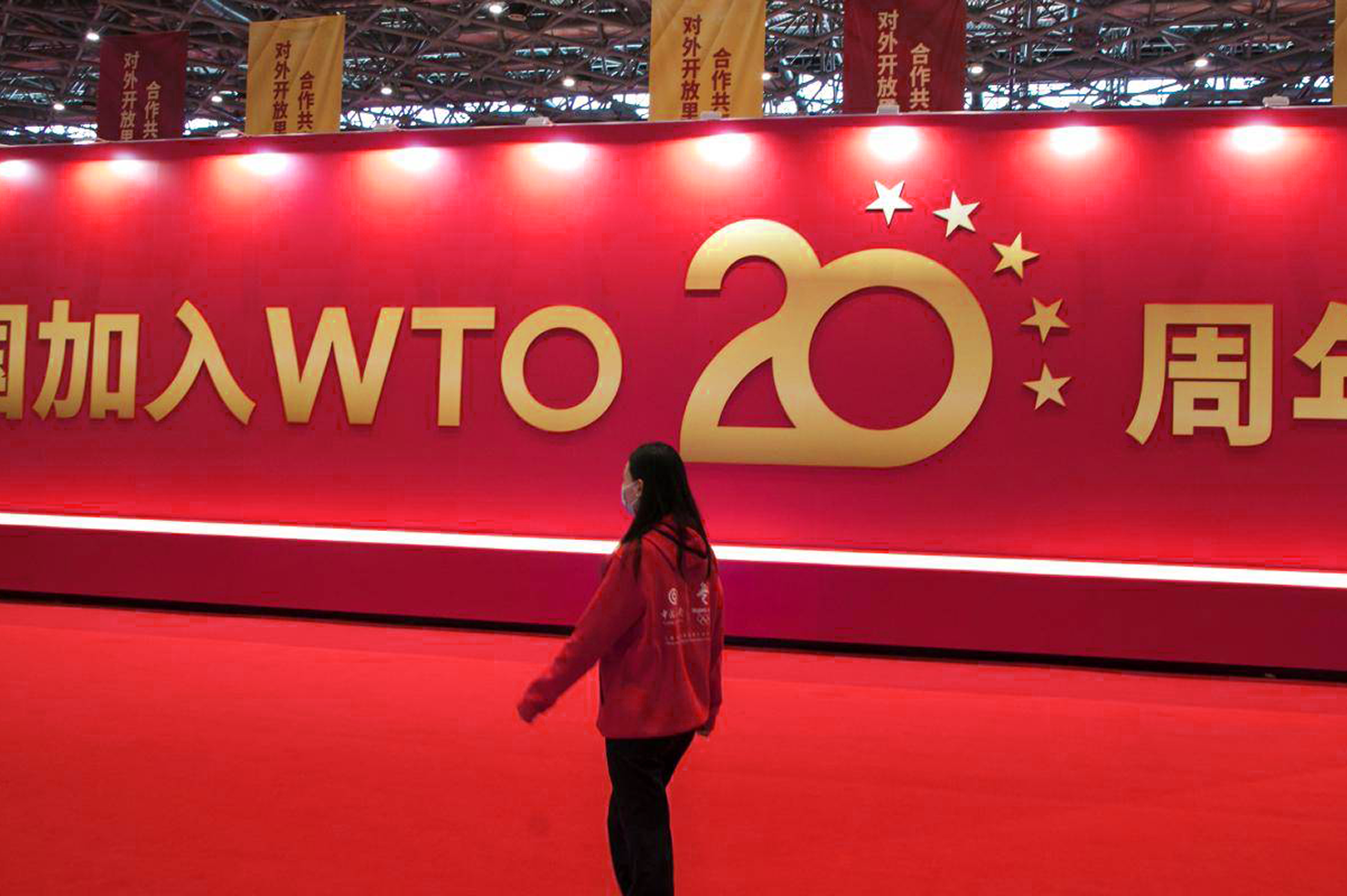
| CHINA ACCESSION TO THE WTO 2001
The admission of China into the World Trade Organization occurred on December 11, 2001, marking one of the most consequential events in modern economic history. This accession was not sudden, it was the culmination of a 15-year negotiation process that began in 1986, when China sought to rejoin the global trading system. As a result, China’s influence accelerated significantly in the early 2000s, driven by its rapid industrialization and demand for raw materials. In Latin America, it became a major trading partner, importing commodities such as soy, copper, and oil, while extending large-scale financing through state-backed institutions.
This engagement was later institutionalized through the Belt and Road Initiative, which expanded Beijing’s footprint in infrastructure, logistics, and energy. In the Middle East, China adopted a strategy centered on energy security and economic cooperation, becoming a leading importer of oil from the region while maintaining a policy of political non-interference. This approach allowed Beijing to build relationships across rival states and eventually assume a more visible diplomatic role, exemplified by its mediation of the Iran-Saudi Arabia rapprochement.
| 2007 MUNICH SECURITY CONFERENCE & 2014 CRIMEA ANNEXATION
Vladimir Putin delivered a landmark speech at the Munich Security Conference on February 10, 2007, widely regarded as a turning point in post–Cold War geopolitics. In that address, he openly challenged the U.S.-led “unipolar” world order, arguing that global stability required a multipolar system in which Russia would be treated as an equal great power. He sharply criticized NATO expansion toward Russia’s borders, describing it as a provocation that undermined trust and threatened Russian security. At the time, many Western policymakers viewed the speech as rhetorical, but in retrospect it is seen as a clear warning that Moscow would resist further Western encroachment into what it considers its strategic sphere of influence.
The years that followed demonstrated that this was not merely rhetoric but the foundation of a more assertive Russian foreign policy. After rising tensions and earlier signals such as the 2008 war in Georgia, the crisis reached a decisive point in 2014 when Russia annexed Crimea following political upheaval in Ukraine. The Kremlin justified the move using the same arguments outlined in Munich: preventing NATO’s potential expansion into Ukraine, protecting strategic military assets like the Black Sea Fleet, and reasserting influence over the post-Soviet space. The annexation led to severe deterioration in relations with the West, economic sanctions, and a prolonged conflict in eastern Ukraine—effectively marking the collapse of the cooperative European security framework that had emerged after the Cold War.
In Latin America, Moscow re-engaged with countries such as Venezuela, Cuba, and Nicaragua through arms sales, energy investments, and symbolic military cooperation. In the Middle East, its resurgence was more decisive, particularly following the Russian intervention in the Syrian Civil War, which reestablished Russia as a key security actor in the region. Unlike China’s economically driven model, Russia’s approach has emphasized military power, regime support, and strategic opportunism, often positioning itself as an alternative partner to governments under Western pressure.
| THE FIRST TRUMP ADMINISTRATION (2017-2021)
The U.S. doctrine under the first administration of President Donal Trump is commonly summarized as “America First”. The America Fist framework prioritized U.S. national sovereignty, economic advantage, and strategic competition with major powers. It rejected many assumptions of the post-Cold War liberal international order that had guided U.S. policy for decades.
For example:
➊ National sovereignty over multilateral governance.
➋ Bilateral deals rather than large multilateral frameworks.
➌ Economic nationalism and trade reciprocity.
➍ Reduced reliance on international institutions.
➎ Preserve peace through strength.
➏ Skepticism of alliances.
➐ Withdrawal from multilateral agreements.
| THE END OF THE LONGEST WAR: AMERICAS CHAOTIC DEPARTURE FROM AFGHANISTAN
In February 2020, the Trump administration under Donald Trump negotiated the Doha Agreement with the Taliban. This deal committed the United States to withdraw troops in exchange for Taliban security guarantees.
The Joe Biden administration’s Middle East policy (2021-2025) combined regional diplomacy and limited military engagement. When Biden took office in January 2021, he decided to complete the withdrawal, extending the deadline but maintaining the strategic objective of ending the war.
| COLLAPSE OF THE AFGHAN GOVERNMENT IN AUGUST 2021
In August 2021, the Afghan government led by Ashraf Ghani collapsed far faster than U.S. intelligence had expected. The Taliban rapidly captured provincial capitals and entered Kabul on August 15, 2021.
In addition, President Joe Biden sought to shift U.S. policy toward Iran from coercive isolation to diplomatic re-engagement. The administration prioritized reviving the nuclear agreement known as the Joint Comprehensive Plan of Action (JCPOA), originally negotiated during the Obama administration.
However, one of the most controversial policy decisions occurred in 2023 during negotiations to secure the release of American detainees held by Iran. As part of the arrangement, approximately USD $6 billion in Iranian funds previously frozen in South Korea were transferred to restricted accounts in Qatar for humanitarian purchases.
"President Joe Biden sought to shift U.S. policy toward Iran from coercive isolation to diplomatic re-engagement. The administration prioritized reviving the nuclear agreement known as the Joint Comprehensive Plan of Action (JCPOA), originally negotiated during the Obama administration"
Although the funds were technically limited to food and medicine, critics argued that the move signaled a weakening of economic pressure and indirectly improved Iran’s financial flexibility. Opponents contended that Tehran could redirect domestic resources previously allocated to humanitarian imports toward military and proxy operations.

| FEBRUARY 24, 2022: RUSSO UKRAINE WAR
In February 24, 2022, Russia launched a full-scale invasion of Ukraine, transforming the conflict into the largest conventional war in Europe since World War II. The offensive aimed at rapidly destabilizing the Ukrainian government, but strong resistance under the leadership of Volodymyr Zelenskyy, combined with extensive Western military and financial support, prevented a swift Russian victory. The war has since evolved into a protracted, high-intensity conflict characterized by shifting frontlines, significant casualties, and widespread destruction of infrastructure. Strategically, it has reinforced NATO cohesion, accelerated military rearmament across Europe, and deepened global geopolitical polarization, particularly between Western democracies and a bloc of states maintaining more neutral or Russia-aligned positions. The conflict has also triggered significant global consequences, including energy disruptions, food supply shocks, and heightened tensions between Russia and the West, making it one of the most consequential international crises of the 21st century.
| OCTOBER 7, 2023: STRATEGIC SHOCK AND REGIONAL ESCALATION
A pivotal inflection point occurred on October 7, 2023, when Hamas launched a coordinated, multi-vector assault against Israel. The attack—combining rocket saturation, cross-border incursions, and mass-casualty operations—triggered the Israel–Gaza war.
The assault re-centered the Palestinian arena within Iran’s broader deterrence architecture. Although Hamas is a Sunni Islamist movement, Tehran has long provided financial, logistical, and military support as part of a pragmatic anti-Israel alignment. Parallel backing has flowed to Palestinian Islamic Jihad, a smaller but highly militarized faction closely aligned with Iranian strategic objectives.
| THE “AXIS OF RESISTANCE” AND MULTI-FRONT PRESSURE
By late 2023 and into 2024, the regional security environment evolved into a coordinated pressure campaign often described as the “Axis of Resistance,” encompassing:
● Hezbollah in Lebanon (northern front pressure against Israel).
● Hamas and Palestinian Islamic Jihad in Gaza.
● Shi'a militias embedded within Iraq and Syria.
● The Houthis in Yemen, who expanded maritime interdiction operations in the Red Sea corridor.
| THE SECOND TRUMP ADMINISTRATION (2025-2029)
At the end of 2025, the second administration of Donald Trump released its National Security Strategy, introducing what it termed the “2025 Trump Corollary” to the Monroe Doctrine, informally labeled by media commentary as the “Donroe Doctrine.”
The strategy frames national security as the preservation of the United States as a sovereign constitutional republic committed to safeguarding citizens’ natural rights and material well-being. It identifies military threats and hostile foreign influence—including espionage, predatory trade practices, narcotics trafficking, human smuggling, infrastructure penetration, digital surveillance, and influence operations—as systemic risks requiring decisive countermeasures.
While not legally binding, the corollary signals a strategic posture centered on hemispheric dominance, denial of rival footholds, and readiness for unilateral enforcement were deemed necessary.
| STATED STRATEGIC OBJECTIVES
➊ Full operational control of national borders.
➋ Resilient national infrastructure.
➌ The world’s most powerful and technologically advanced military.
➍ A modernized nuclear deterrent and next-generation missile defense (“Golden Dome”).
➎ A dynamic and innovative economy.
➏ A robust industrial base.
➐ Energy dominance.
➑ Scientific and technological primacy.
➒ Maintenance of U.S. soft power.
➓ Restoration of perceived national cultural cohesion.
| CORE CHARACTERISTICS OF THE 2025 COROLLARY
1 Hemispheric Centrality
The Western Hemisphere is re-elevated as the principal theater of strategic competition.
2 Counter-External Influence
Unlike the original doctrine’s focus on European monarchies, the updated framework targets strategic footholds by China, Russia, and Iran in ports, digital infrastructure, energy grids, defense supply chains, and rare-earth extraction.
3 Militarized Counter-Terrorism
The United States formally began designating terrorist organizations in 1997 under the Antiterrorism and Effective Death Penalty Act, which authorized the Secretary of State to compile a Foreign Terrorist Organization (FTO) list. After the September 11, 2001 attacks, counter-terrorism became the organizing principle of U.S. national security doctrine.
In recent years, particularly from 2019 onward, the scope of terrorist designation expanded to include certain transnational criminal organizations. In 2019, for example, the Trump administration designated Mexico’s Sinaloa Cartel and other cartels as priority national security threats, and debates intensified over formally classifying such entities as Foreign Terrorist Organizations.

Under the 2025 corollary framework, transnational criminal organizations are increasingly framed not merely as law-enforcement concerns but as hybrid security actors capable of destabilizing states, corrupting institutions, and facilitating foreign adversarial influence. This broadening of the terrorism paradigm expands the logic of extraterritorial enforcement and potentially lowers the threshold for cross-border security operations.
Critics contend that this posture revives coercive hemispheric management and risks friction with international law, sovereign equality principles, and multilateral norms.
| STRATEGIC DOCTRINE TOWARD LATIN AMERICA AND THE MIDDLE EAST DURING THE SECOND TRUMP ADMINISTRATION
Over the past decade, the growing economic and diplomatic reach of China in both Latin America and the Middle East has prompted the U.S. to adopt a more assertive strategy aimed at limiting Beijing’s strategic influence. The Belt and Road initiative was launched in 2013 by Xi Jinping. The competition is driven by infrastructure investment, energy security, technology standards, and military access.
Compared with the first Trump presidency, the second term has adopted a more interventionist and security-driven posture, particularly toward the Western Hemisphere and the Middle East.
In January 2026, U.S. forces captured Venezuela president Nicolas Maduro, making one of the most direct American interventions in Latin America in decades. The event signaled Washington’s willingness to pursue regime change to dismantle narco-state networks and restore democratic governance.
The Trump administration has expanded efforts to designate major criminal groups as terrorist organizations, allowing broader use of military and intelligence tools. Trump has openly discussed the possibility of direct U.S. military operations against cartel infrastructure, including in Mexico if cooperation were insufficient. U.S. agencies provided intelligence and surveillance information that helped Mexican forces locate El Mencho in February 22, 2026.
A central initiative is the Shield of the Americas, a multinational security framework created in Doral Miami in March 2026 to coordinate intelligence sharing, military cooperation and joint operations against drug cartels across the Western Hemisphere. The inaugural summit included leaders or representatives from roughly a dozen Latin American and Caribbean countries aligned with the initiative’s security agenda.
"A central initiative is the Shield of the Americas, a multinational security framework created in Doral Miami in March 2026 to coordinate intelligence sharing, military cooperation and joint operations against drug cartels across the Western Hemisphere"
Donald Trump reinstated a posture of “maximum pressure” toward Tehran. The administration re-tightened sanctions enforcement, expanded secondary sanctions targeting financial intermediaries, and reinforced regional deterrence through force repositioning in the Eastern Mediterranean and Gulf. Washington’s strategic objective was dual: deter Iranian escalation while avoiding large-scale U.S. ground involvement in the region.
This doctrine emphasized precision airpower, naval dominance, and strategic deterrence rather than occupation warfare.
| JUNE 22, 2025: OPERATION MIDNIGHT HAMMER
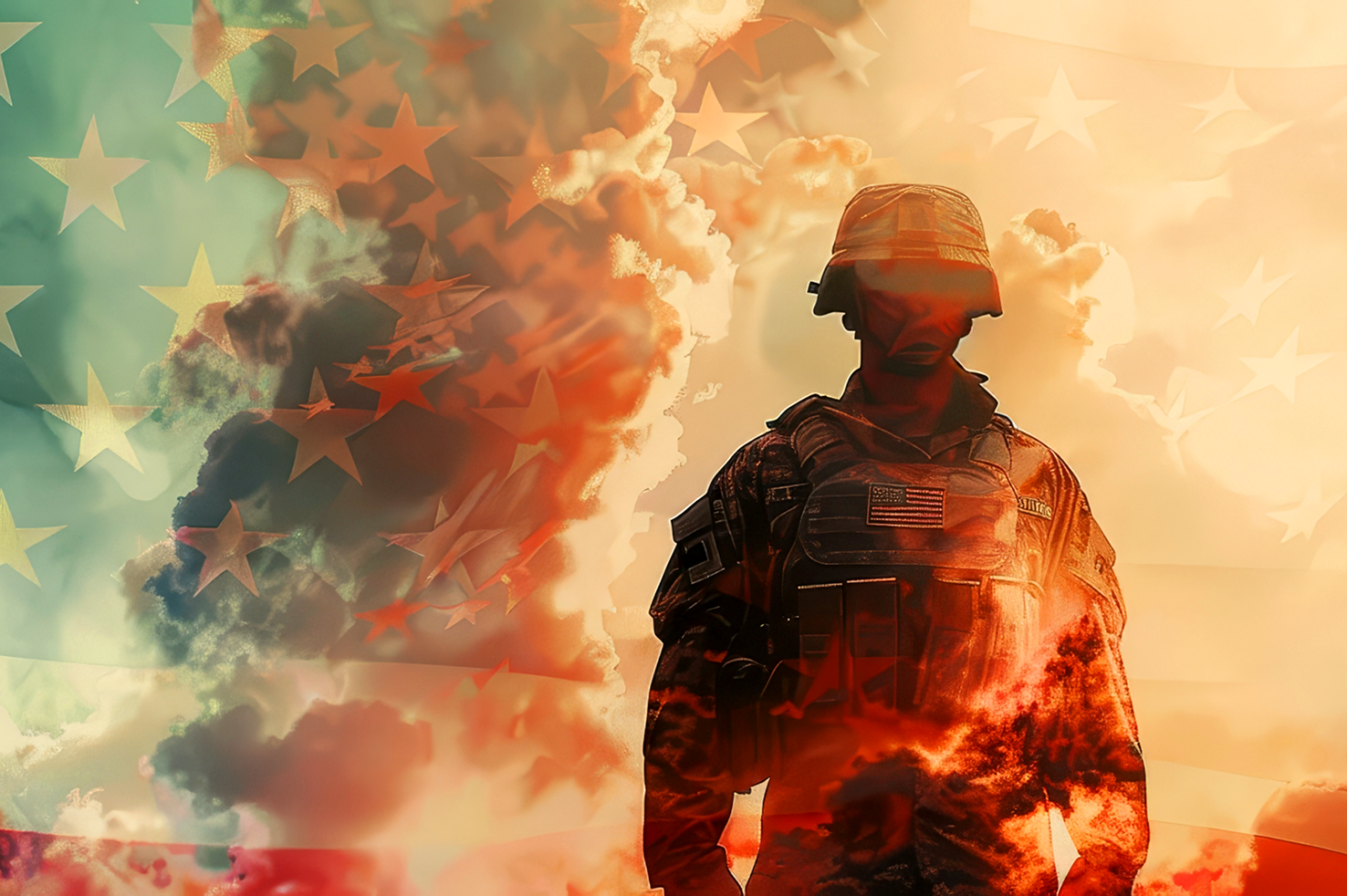
In the early hours of June 22, 2025, the U.S. launched Operation Midnight Hammer, a coordinated air and naval assault targeting Iran’s most critical nuclear infrastructure, Fordow, Natanz and Isfahan. The campaign was characterized by synchronized proxy activity across multiple fronts, integrating missile salvos, drone swarms, cyber intrusions, and maritime harassment in strategic waterways. Long-range strikes were conducted by stealth aircraft bombers including the Northrop B-2 Spirit bomber, supported by advanced fighter escorts and electronic warfare platforms.
Washington framed the strikes as a limited, preemptive action, not a declaration of full-scale war. However, the move crossed what Tehran called a “very big lines”, transforming a shadow conflict into open confrontation. According to public reporting at the time, President Trump authorized targeted retaliatory measures only after confirming that escalation could be contained, reinforcing his stated threshold-based approach. The U.S. decision cannot be understood without Iran’s long-standing strategy of asymmetric warfare through proxies, often referred to as the “Axis of Resistance: Hezbollah (Lebanon), Hamas (Gaza), Houthis (Yemen) and Shia militias in Iraq and Syria.
| FEBRUARY 28, 2026: OPERATION EPIC FURY
In February 2026, the United States and Israel initiated a sustained campaign referred as Operation Epic Fury targeting Iran’s strategic military infrastructure. This operation was a decisive escalation from deterrence into a full-scale, sustained military conflict with Iran.
Primary targets included:
● Missile production facilities operated by the Islamic Revolutionary Guard Corps.
● Underground missile depots.
● Naval bases used to support operations in the Persian Gulf.
● Command-and-control nodes coordinating regional militias.
Again, massive deployment of assets including: Aircraft carriers and submarines, F-35, F-22, stealth aircraft bombers such as the Northrop B-2 and B-52 were used to strike hardened military installations. The operational doctrine underpinning these campaigns emphasized precision strike capability, rapid escalation management, and overwhelming airpower, while deliberately avoiding large-scale ground force deployment.
At present, the United States faces a constrained strategic decision set. After several weeks of intensive U.S.-Israeli strikes, including operations that reportedly eliminated senior Iranian leadership, Tehran has neither relinquished its control over the Strait of Hormuz nor moderated its posture in response to U.S. demands. Theran has maintained retaliatory fire around the Middle East, with Saudi Arabia and the United Arab Emirates. Iran set a massive natural gas field in the UAE ablaze as it stepped up attacks on key energy sites. Iran has moved to secure an effective veto power over which ships transit the Strait of Hormuz. These raises doubt about the marginal effectiveness of continued strikes under the current framework.
As a result, the Trump administration is left with two principal alternatives: de-escalate by terminating military operations, potentially incentivizing Iran to restore tanker access through Hormuz; or escalate further in an effort to compel Tehran into strategic capitulation.
| SOVEREIGNTY IN A COMPETITIVE GLOBAL ORDER
The emergence of the so-called “Donroe Doctrine” can be best understood as a structural response to the expanding geopolitical and geoeconomic footprint of China and Russia across both Latin America and the Middle East. It reflects not ideological reflex, but a recalibration driven by converging strategic pressures.
First, in Latin America, the United States has observed a sustained erosion of its relative economic primacy. China has become the principal trading partner for several major economies in the region and a dominant financier of infrastructure through state-backed lending and construction initiatives. This has translated into tangible influence over strategic sectors: ports, energy grids, telecommunications, and critical minerals. From Washington’s perspective, these are not neutral commercial engagements, they carry dual-use potential, particularly in digital infrastructure and logistics nodes that could support intelligence collection or future military access. The Donroe Doctrine, therefore, seeks to reassert hemispheric control over supply chains, nearshoring networks, and strategic assets deemed essential to national security.
Second, Russia’s role, while more limited economically, has been asymmetric and disruptive. Through security cooperation, arms sales, cyber operations, and political alignment with anti-U.S. governments, Moscow has demonstrated an ability to project influence at relatively low cost. This is particularly salient in contexts where governance is weak and institutional resilience is limited. The U.S. response under the Donroe framework is to harden political and security architectures in the hemisphere, strengthening intelligence cooperation, countering illicit networks, and reducing the permissive environment for extra-hemispheric actors.
Third, the convergence of Chinese and Russian activity is viewed in Washington not as coincidental but as systemically competitive. While their methods differ, China’s capital-intensive, infrastructure-led approach versus Russia’s opportunistic, security-centric posture, their combined effect is to dilute U.S. influence and introduce alternative governance and development models that are less aligned with Western norms. The Donroe Doctrine is thus partly about setting boundaries: signaling that while economic engagement is not prohibited, strategic penetration of critical sectors will be contested.
"The U.S. response under the Donroe framework is to harden political and security architectures in the hemisphere, strengthening intelligence cooperation, countering illicit networks, and reducing the permissive environment for extra-hemispheric actors"

The Middle East dimension reinforces this shift. Over the past decade, the United States has gradually reduced its direct military footprint in the region, even as China and Russia have expanded theirs, China economically through energy and infrastructure, and Russia militarily, most notably following its intervention in Syria. This has demonstrated to U.S. policymakers that vacuums are quickly filled, often by actors with divergent strategic objectives.
As a result, the Donroe Doctrine implicitly links hemispheric consolidation with global burden reallocation. By stabilizing and securing its near abroad—economically, politically, and technologically—the United States can free up strategic bandwidth to manage great-power competition elsewhere, including the Indo-Pacific. At the same time, a more disciplined approach to the Middle East—favoring offshore balancing over deep entanglement—reflects the recognition that absolute dominance is no longer cost-effective in a multipolar system.
Finally, there is a domestic economic logic underpinning this shift. The COVID-era disruptions and subsequent geopolitical fragmentation exposed vulnerabilities in global supply chains, many of which are heavily dependent on China. Latin America, given its geographic proximity and resource endowment, is seen as a natural alternative for supply chain diversification. However, this strategy is only viable if the region remains within a U.S.-aligned economic and regulatory orbit. Chinese or Russian dominance in key sectors would undermine that objective.
In essence, the Donroe Doctrine is less about exclusion and more about control over strategic vectors of power, trade routes, data flows, infrastructure, and political alignment. It is a recognition that in an era of systemic rivalry, geographic proximity once again matters, and that influence in the Western Hemisphere is not just a legacy position, but a prerequisite for sustaining global power projection.

Pedro David Martínez
CEO, Regius Magazine.
regiusmagazine.com